
What is the best place for concert suites in the United States?
What is the best place for concert suites in the United States?
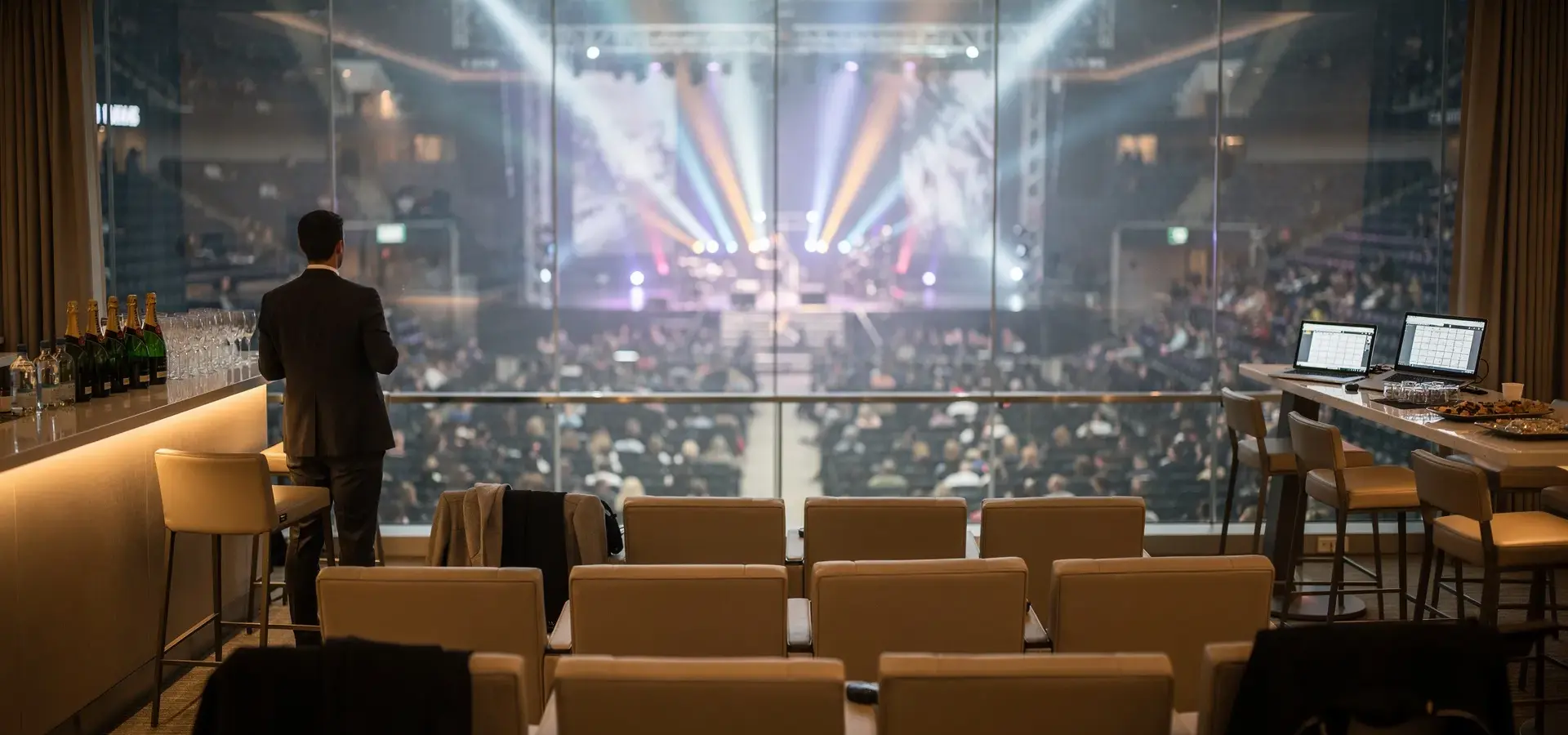
Define the best concert-suite option by group fit
The best concert-suite option is the place and package that fit your group, event purpose, preferred experience, timing, and total budget—not a venue that can be ranked universally for every concert. A corporate host may need a controlled setting for client conversations, while a music-fan group may care more about atmosphere, stage sightlines, and flexible seating. A family or friend group may place more weight on shared space, easy arrival, and food service.
Compare each option by cost and inclusions, comfortable capacity, location, availability, format, catering and bar arrangements, parking, amenities, and contract terms. The strongest choice is usually the option that matches your priorities at a comfortable total cost after the date is confirmed.
Start with a short event brief before you look at suite names or headline prices:
- Event: Identify the concert, artist or tour, venue, and exact date.
- Group: Estimate expected attendance, then separate confirmed guests from people who may still decline.
- Purpose: State whether the outing is for client hospitality, employee recognition, networking, family time, or a social celebration.
- Experience: Decide whether you need a private room, a social party format, club-level access, food service, parking, or a quieter environment.
- Budget: Set a total ceiling and a working per-guest limit, including fees, food, parking, and other event costs.
- Timing: Record how much time guests need to respond and how close the concert date is.
This brief works whether you are comparing a concert in Baltimore, Atlanta, Phoenix, Arlington, New Orleans, or another U.S. market. The city narrows the search; your group requirements determine the fit.
Do not choose from a feature list alone. A suite with more amenities can still be a poor match if its capacity, seating arrangement, access rules, or total cost does not suit your group. Use the matrix in the next section to separate what is included, what costs extra, and what still needs confirmation. Then compare only options that can accommodate the concert, date, and attendance plan.
Build a comparison matrix that separates confirmed and unconfirmed terms
A comparison matrix keeps a promising suite from looking more complete than its written terms support. Give each option its own row or worksheet, and use separate columns for included items, extra-cost items, and details that need confirmation. Record the all-in price with fees, comfortable seated capacity, catering and bar pricing, hours, deposit, and other fees rather than copying only the advertised suite price.
| Comparison point | What to record as included | What may cost extra | What to confirm before choosing |
|---|---|---|---|
| Capacity and seating | Ticket count, seated capacity, standing space, and seating type | Overflow tickets or additional access | Whether the capacity is comfortable for your expected attendance |
| Location and view | Suite level, stage orientation, and sightline description | Preferred locations or upgraded areas | Whether the offered room has the view and access your group expects |
| Food and bar | Menus, service style, and any stated package | Catering, drinks, attendant service, or concessions | Whether service is included, optional, restricted, or priced separately |
| Arrival and access | Entry route, parking passes, and lounge access | Parking, upgrades, or additional passes | Which guests receive access and how passes are distributed |
| Room and amenities | Restrooms, screens, tables, climate protection, and furnishings | Optional services or add-ons | Whether each feature applies to the exact suite and concert |
| Commercial terms | Event date, hours, contract scope, and payment schedule | Fees, deposits, taxes, and other charges | Cancellation, payment, restrictions, and deadlines |
| Availability | The exact concert date and offered format | Alternative dates or substitute inventory | Whether the quoted inventory is still available when you decide |
Use a simple status such as included, extra cost, or needs confirmation for every material item. A blank cell is not a neutral answer; it means you still have a planning question. Score the options only after the same questions have been applied to each of them. This prevents a polished venue profile from outweighing a less visible cost, capacity limit, or access restriction.
Filter options by actual attendance and suite format
Capacity is a practical filter, but advertised capacity is not the same as comfortable capacity. Start with the people who are likely to attend, allow for normal changes, and decide whether everyone needs a seat, whether standing space is acceptable, and whether the group needs to remain together. A private room may be inefficient for a small group, while a room that technically holds a large party may feel crowded when guests are expected to eat, move around, and talk.
The available format can differ sharply by venue. Capital One Arena offers a limited number of private suites for single-event rentals for groups from 8-54+ for games, concerts, and events. A St. Louis Cardinals party-suite listing states occupancy of 43+ guests, while party suites vary in size and are conjoined. These are venue-specific examples, not a general capacity rule.
Use the following examples to frame questions about the format you need:
- Smaller groups: At MetLife Stadium, club seats can suit smaller groups that do not need a full suite and offer comfort and premium perks. Ask whether club seating gives your group enough privacy and shared access for the concert purpose.
- Compact private format: An Enterprise Center Single Sky Level Suite includes 8 theatre-style seats and 4 barstool seats, with an option to purchase up to 6 standing-room-only tickets. The format has a 12-ticket minimum purchase. Ask whether the mix of fixed seats, barstools, and standing tickets works for your attendance plan.
- Whole-room pricing: At Kaseya Center, a private suite is priced as a whole room for the group, not per seat. That makes the number of guests who actually attend especially relevant to your per-guest calculation.
- Larger social format: The Kaseya Center Premium Party Suite has stadium seating for 24 plus an additional 8 bar-stool railing seats, for a total of 32 seats. The listing presents it as a social setting with a lounge area and stadium-style seats.
Before you invite guests, ask for the comfortable seated capacity, the required purchase minimum, and the treatment of additional or standing tickets. If your group is close to the stated limit, ask how the room is configured rather than relying on the maximum number. If attendance may fall, compare the total room cost with a smaller format instead of dividing the same price across fewer guests. A suitable format is the one that preserves the intended experience at the attendance you can reasonably support.

Match hospitality features to the concert occasion
A concert suite is a hospitality format, so assess how your group will use the space during the event. A corporate group may need conversation areas and clear arrival instructions. A social group may prefer lounge seating, a bar area, and a room that supports movement. A group focused on the performance may place more weight on stage orientation and the ability to move between the room and viewing area.
Private suites can offer flexible seating. In a Brand New private-suite example, most suites are seated first come, first serve, and the source says the seats provide a similar view of the stage, field, or court. Treat that as a question for the offered concert package rather than a universal suite feature. Ask whether seats are assigned, whether guests may choose among available seats, and whether the room has a defined stage sightline.
Published examples show why each amenity needs its own status in your matrix. Most suites in a Jay-Z premium-seating example may include couches, loveseats, bar stools, stadium seats, TVs, a kitchen area, a closet, countertops, and tables; guests will also likely have weather shelter, climate control, and a view of the action. A Reliant Park suite example lists VIP parking, optional attendant service and in-suite catering, a private balcony, club-lounge access during select events, and private restrooms in select units.
These examples help you ask precise questions. They do not establish that the same features, service, or view apply to your concert.
Arrival can affect the experience as much as the room. At Intuit Dome, each premium space includes 4 VIP garage parking passes, and private entrances near the garages are described as providing faster, more convenient arrival and exit. At Kaseya Center, parking and entry vary by suite, so the quote should specify what comes with the suite. A Reliant Park example lists access to the 300 level Club Lounge during select events and private restrooms in select units.
Ask for the exact entry route, parking allocation, lounge eligibility, restroom arrangement, attendant responsibility, and guest-access rules. If your group includes clients, older guests, or people with mobility requirements, put those operating needs in the inquiry rather than assuming that a premium label answers them.
Separate the private room from the food-and-beverage package
A private room and its food-and-beverage package are separate decisions. A suite price may cover the room and event access without covering catering, drinks, an attendant, parking, or other services. Ask for each component as a separate line item so you can compare a lighter package with a hosted meal or bar service.
At Spectrum Center, catering is not typically included in the suite price; food may be purchased from venue-provided suite caterers or concession stands, and outside food and beverages are not allowed inside the suites or venue. At Bank of America Stadium, gourmet catering is available in all suites at an additional cost, but suite guests are not required to purchase it. At Intuit Dome, Halo Lofts feature all-inclusive service, while other suites provide premium à la carte menus and curated bar selections; guests can order through the app or in-suite through an attendant.
Use published food figures as venue-specific planning references, not as a U.S. concert standard. A Spectrum Center listing recommends budgeting $75-$125 per guest for a full catering spread including appetizers, entrees, alcoholic beverages, and dessert, but says catering is not included in private-suite rentals. Charlotte FC Suites states that groups purchasing in-suite catering spend $100 per person on average for food and drink, including alcohol; it gives a rough budget of $2,000 for a group of 20 and says there is no catering minimum.
Those figures measure different published examples and do not set the price for your concert. Ask whether the menu is required, whether there is a minimum, whether drinks are included, and whether an attendant is charged separately.
Food rules can change the practical value of a suite. At Charlotte FC Suites, catering is not required and there is no catering minimum; concession purchases may be brought to the suite, but outside food and beverage are not permitted inside the stadium, and a suite attendant still costs extra without in-suite catering. At Spectrum Center, catering is not available for premium club seats, while club ticket holders typically have in-seat service with premium food and beverage options in the exclusive club lounge.
Enterprise Center Single Sky Level Suites on the 400 Level include 8 theatre-style seats and 4 barstool seats. Food and beverage packages are available for purchase, and the format allows the option to purchase up to 6 standing-room-only tickets. Record whether a package is optional, what it covers, and whether the seating and ticket rules fit your group.

Calculate the all-in cost per guest before choosing
Calculate the total occasion cost before comparing per-guest value. Start with the quoted room or suite price, then add every required or selected charge:
- Add the suite, room, or ticket price.
- Add taxes, service charges, deposits, and other fees stated in the quote.
- Add catering, drinks, attendant service, or concession allowances.
- Add parking, transportation, or other arrival costs that your group will pay.
- Add any required minimums or additional tickets.
- Divide the expected total by the number of guests who will actually attend.
Ask for the all-in price with fees, comfortable seated capacity, inclusions and extras, catering and bar pricing, hours, deposit, and other fees. Use the same cost categories for every shortlisted option.
Kaseya Center examples show why a headline range needs context. One listing says suites typically run from $3,500 to $28,000 per event, depending on the game, suite, and day of the week. It describes that range as a broad market reference, not a quote, and says every date is priced on its own. A separate listing reports $4,000-$28,000 for Miami Heat suites, depending on the opponent, date, and suite type. These ranges cover different scopes and are not concert pricing; request a date-specific quote.
At Kaseya Center, catering is usually priced separately and depends on the venue, suite, and owner. Another listing says most groups budget $125-$150 per person for catering, although catering is optional. Other costs may include parking, concessions, and souvenirs. Payment for a Kaseya Center suite is due in full at the time of purchase, according to that listing.
Per-guest value depends on attendance, not only on the room price. For example, a $12,000 room divided among 30 attending guests produces a different planning result from the same room divided among 20 guests; that arithmetic is a budgeting illustration, not an event quote. If your attendance is uncertain, calculate a low-attendance and high-attendance case before you commit.
At Kaseya Center, the event, suite, and day of the week affect the quote, and each date is priced individually. Keep the source’s scope beside every range in your worksheet. Do not combine a sports-suite range, a broader venue range, and a catering reference into a single concert estimate.
A lower room price is not automatically the better value if it removes the service your occasion requires or creates separate costs that your group will still incur. A higher total can be reasonable when the capacity, access, service, and operating terms fit the brief. Compare the completed all-in totals and per-guest figures only after the exact date, suite, inclusions, and fees have been confirmed.
Use venue examples as questions for the exact concert package
Published venue examples are most useful when they turn vague expectations into questions. Before you approve an option, ask for written answers to the following:
- Ticket eligibility: Does every person entering the suite need a suite ticket? A Brand New suite example says only guests with suite tickets may enter the suite and that inviting guests without suite tickets is strictly prohibited.
- Capacity: What is the comfortable seated capacity, and are additional or standing tickets allowed?
- Seating: Are seats assigned, first come first serve, or divided between stadium seats, barstools, couches, and standing areas?
- Sightline: Where does the offered suite face in relation to the concert stage?
- Restrooms: Is there a private restroom, shared restroom access, or a restriction that applies to the specific unit?
- Parking and entry: How many passes are included, where do guests enter, and which guests can use the route?
- Food service: Is catering included, optional, required, or unavailable for the format?
- Attendant and lounge access: Is an attendant included or extra, and does lounge access apply to this event?
- Payment and fees: What deposit, payment deadline, taxes, service charges, and other fees apply?
Check date-specific inventory, including options not publicly listed
A comparison is not complete until the exact concert date and suitable inventory are confirmed. A venue page may describe a suite format without showing whether that room is available for your concert, whether its terms apply to the event, or whether the capacity fits your group. Send the event name, venue, date, expected attendance, and preferred format when a public listing does not answer those questions.
Intuit Dome provides a useful planning signal: suite rental availability is limited, and suites are often not available at the last minute. At Intuit Dome, limited overflow tickets may be purchased for a suite at an additional cost, and catering may be pre-ordered. Ask whether either option applies to the exact concert rather than assuming it does.
Use this availability sequence:
- Identify the exact concert, venue, and date.
- State the expected party size and the acceptable range if attendance may change.
- Describe the format you want: private suite, party-style room, club seating, or another group arrangement.
- List non-negotiable requirements such as stage sightline, parking, catering, lounge access, accessibility, or a private restroom.
- Ask for the specific inventory that meets those requirements and the date-specific all-in price.
- Mark each response as available, unavailable, alternative, or still unconfirmed.
Choose only after the option that best matches your priorities has also passed the date-availability check.

Act promptly when demand or guest coordination narrows the choice
Act promptly when any of three conditions applies: the concert date is approaching, suitable inventory appears limited, or your guests need time to decide whether they can attend. Intuit Dome states that suite rental availability is limited and that suites are often not available at the last minute. The same source notes that guests coordinating a group event often need more time to confirm their availability.
These conditions affect different parts of your plan. Limited inventory reduces the number of formats you can compare. A near-term event compresses the time available for a quote, guest communication, payment, and food planning. Slow guest responses make it harder to know whether a room is appropriately sized.
The first action is not to promise attendance or select a room from a headline listing. Send the concert date, venue, party-size range, occasion, and preferred format so the availability question can be answered directly. At the same time, give guests a response deadline and maintain a realistic attendance range.
If the date is close, ask for the fastest available written response on inventory, capacity, total cost, payment timing, and food arrangements. If the preferred format is unavailable, compare the stated alternative against the same matrix rather than accepting a substitute without checking its access, seating, and cost.
Prepare a quote request with the details the response must answer
A focused quote request gives the responding party enough information to identify a suitable option instead of returning a generic suite description. Prepare these details:
- Venue and concert: Name the venue, artist or tour, and the specific event date.
- Party size: Give the expected number of guests and a reasonable range if attendance is still changing.
- Occasion: Explain whether the outing is for corporate hospitality, employee recognition, client entertainment, a family event, or a social group.
- Experience: State whether you need a private room, party-style seating, club access, stage-facing views, food service, parking, or a specific arrival arrangement.
- Budget: Give a total ceiling or per-guest target and say whether catering, parking, and other charges must fit inside it.
- Operational needs: List accessibility, guest-ticket, timing, restroom, food, beverage, or service requirements.
- Contact details: Include the name, organization if relevant, phone number, email, and the best way to receive the response.
Include questions that make the response usable in your matrix: Which suite or seating format is available for the concert? What is the comfortable capacity? What is included, what costs extra, and what remains subject to confirmation? What are the catering, parking, payment, deposit, contract, and cancellation terms?
A MetLife Stadium private luxury suite can range from $5,000-$35,000 depending on the event. That figure is a venue-specific range, not a price for your concert or a substitute for a date-specific quote. Use published ranges to set questions and budget boundaries, then record the actual response separately.
You can structure the request in a short format:
I am planning [concert or tour] at [venue] on the specific event date for approximately [party-size range] guests. The occasion is [purpose]. We are comparing [preferred format] and need [priority requirements]. Please provide the available option, comfortable capacity, all-in price with fees, catering and parking terms, access details, payment schedule, and any restrictions. Please identify which terms are confirmed for this event and which require further confirmation.
A request should generate information for a decision.
Resolve material commercial and operational questions before approval
Do not approve an option while a missing answer could change the cost, group fit, access, or event experience. Return the response to your matrix and look for unresolved items in five areas:
- Capacity: Does the room comfortably fit the expected group, and are all guests entitled to enter?
- Package: Are food, drinks, parking, attendant service, lounge access, and restrooms included or separate?
- View and seating: Does the offered suite face the stage as expected, and are seats assigned or flexible?
- Commercial terms: Are the all-in price, fees, deposit, payment deadline, hours, and cancellation terms written clearly?
- Operations: Can the group meet the arrival, accessibility, guest-ticket, catering, and timing requirements?
Use the included, extra-cost, and needs-confirmation columns to show exactly where the uncertainty remains.
Ask for clarification in writing when a response uses broad terms such as premium, hospitality, private, or VIP without defining the actual package. Ask for the exact suite or seating format, the event date covered by the response, the required purchase, and every material charge. If an answer changes the per-guest cost or makes the format unsuitable, update the comparison rather than treating the original option as unchanged.
A qualified professional should decide individual suitability where your group has legal, accessibility, contractual, or other specialized requirements. The practical decision gate is straightforward: proceed only when the confirmed package fits the attendance plan, occasion, operating requirements, and all-in budget.
Use the verified comparison to choose the strongest fit
The best place for concert suites in the United States depends on the fit you can demonstrate for a specific group and concert. Shortlist the formats that match your attendance, compare the complete hospitality package, calculate the all-in per-guest cost, and confirm the date-specific inventory. Then choose the option that meets your priorities at a comfortable total cost, with no material access, inclusion, fee, or payment question left unresolved.
Have your venue, concert date, party-size range, occasion, preferred experience, budget parameters, and contact details ready. Treat the response as event-specific information to complete your matrix, not as a universal ranking or a promise that inventory, seating, inclusions, or pricing will remain available.
When the event date is near, the group is large, or guests need time to confirm, send the inquiry before the comparison window narrows. A clear request gives you a basis for checking the room, package, logistics, and total cost before approval.
What should you verify before requesting a U.S. concert-suite quote?
When should I act urgently on finding the best place for concert suites in the United States?
Act promptly when the concert date is approaching, suitable suite inventory appears limited, or guests need time to confirm attendance. Start by sending the venue, event date, expected party-size range, occasion, and preferred format for an availability and pricing check. There is no universal lead-time rule, so do not assume a last-minute suite will be available.
What should I include in a concert-suite quote request?
Provide the venue, concert or tour, exact event date, expected party-size range, occasion, preferred format, budget parameters, and operational requirements such as stage sightlines, catering, parking, accessibility, or restroom needs. Include contact details and ask for the specific available suite, comfortable capacity, all-in price with fees, inclusions, payment terms, and restrictions. The response remains a quote inquiry until event-specific availability, terms, and price are confirmed.
How should I calculate the per-guest cost when attendance is uncertain?
Add the suite price, taxes, service charges, deposits, fees, catering, drinks, attendant service, parking, and any required additional tickets. Divide the resulting total by the number of guests expected to attend, then run separate low-attendance and high-attendance scenarios.
What catering and access terms should I verify before approving a concert suite?
Confirm whether catering, drinks, attendant service, parking, lounge access, and restrooms are included, optional, unavailable, or priced separately. Also verify whether every guest needs a suite ticket, how many tickets or passes are provided, whether seats are assigned, and what restrictions apply to outside food and beverages. Require these details for the exact concert, suite, date, and group rather than relying on a general venue description.
Hosting a group?
Tell us the date and the headcount
We get back to you within one business day with what is available and what each suite costs.
Request a quote