
twins suites
Twins Suites: A Decision Guide to Fit, Guest Count, Pricing, and Quote Requests
Start with the client-hosting experience you need
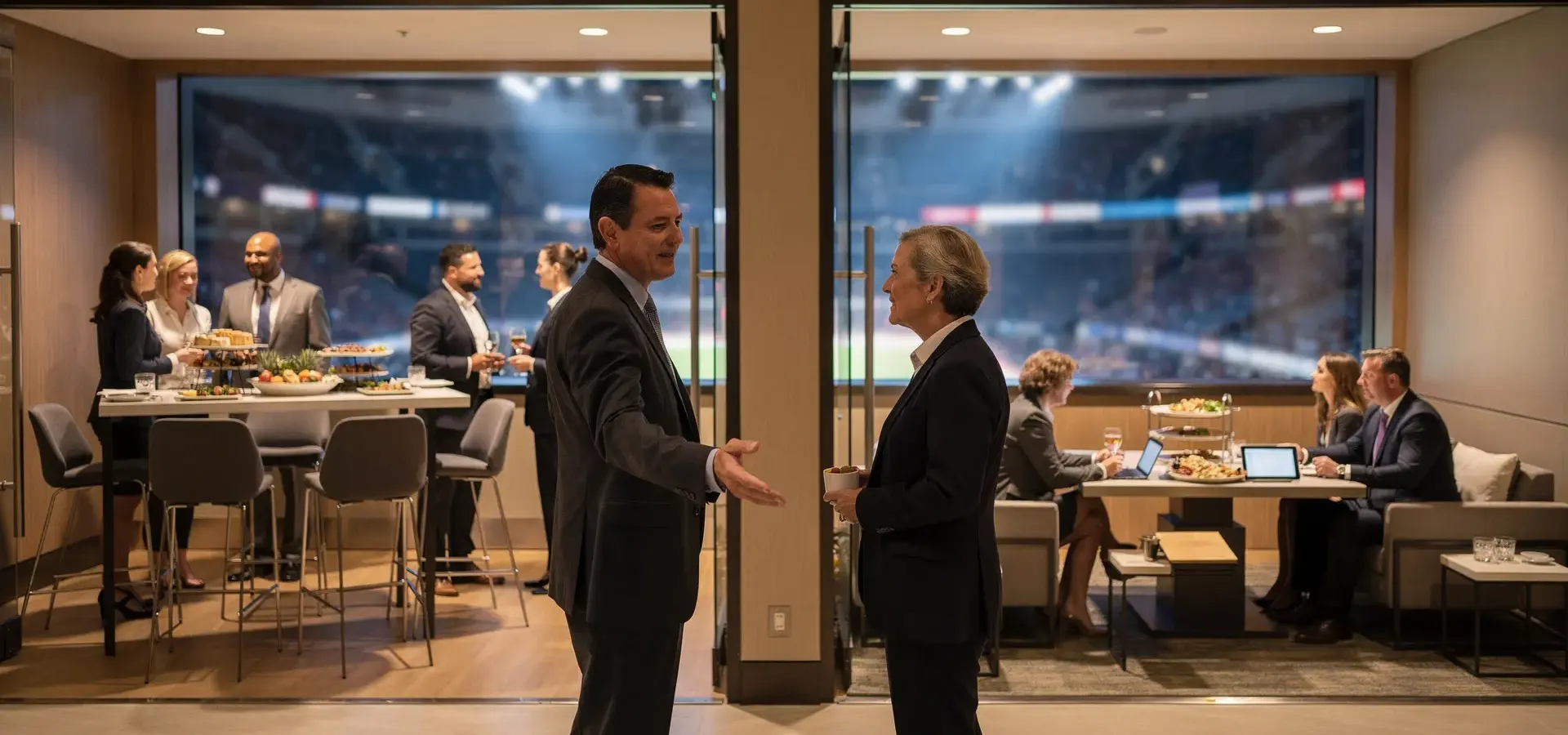
For a Minnesota Twins client-hosting event, choose the hospitality format by starting with your actual guest count and the kind of interaction you need. A traditional suite gives you a defined setting for the group, with seating, food and beverage options, and support around the game itself.
Traditional suites at Target Field are located on the suite level and offer catering options, indoor and outdoor seating options, climate-controlled space, HDTVs, WiFi, and an in-suite attendant. Minnesota Twins suites can also add in-suite catering and beverage packages, provide climate-controlled seating and sightlines, and offer access to buy VIP parking passes.
That combination can suit a client or prospect event when you want the game to remain the main attraction while giving your group a place to arrive, eat, talk, and return to the action. It also gives you several details to define before you ask for pricing: whether the group needs outdoor seating, whether food should be arranged in advance, and whether parking matters to the guests you are hosting.
LuxuryVIPSuites.com can be your next planning resource. Start by deciding what the event must accomplish, then use the guest count and hospitality requirements to shape a focused private-suite inquiry.
Read the guest list before choosing the format
The guest list should determine the first format you investigate, because a two-person client meeting creates a different seating problem from a 30-person account event. Target Field is listed as having 30 suites with capacities ranging from 16 to 150 guests, while smaller parties of 2 to 8 guests are recommended to book club seats. Use those figures as the initial size filter, not as a reason to add empty seats to your plan.
| Expected attendance | Format to investigate first | Planning implication |
|---|---|---|
| 2–8 guests | Club seats | A smaller client meeting may fit a club-seat plan better than a private suite. |
| 16 guests | Premier or Killebrew Suite | Both named suite examples accommodate 16 guests, so the package and game details become the next questions. |
| 16+ guests | Mauer or Killebrew Suite | The listed capacity is expressed as 16+ guests; submit the expected headcount rather than relying on the minimum. |
| 20+ guests | Puckett Suite | The listed Puckett capacity starts at 20+ guests, which gives you a possible fit for a larger hosted group. |
| 24 or 30 guests | A suite for 24 or 30 guests | For a 24- or 30-guest gathering, ask which suite option matches your confirmed attendance. |
| More than one suite’s practical capacity | Adjacent suites | Adjacent suites can be combined for a larger corporate event. |
The named traditional-suite capacities are Premier Suites for 16 guests, Mauer Suites for 16+ guests, Killebrew Suites for 16+ guests, and Puckett Suites for 20+ guests. A 24-guest or 30-guest suite can also be selected for an intimate gathering, while adjacent suites can be combined for a larger corporate event.
Use the number you expect to attend, not the number you invited, as the working figure. If you expect 18 guests but need room for late additions, say both numbers in the inquiry: 18 expected and a larger capacity under consideration. That lets the quote process address the actual hosting plan instead of forcing you to choose from a name alone.
For a client or prospect event, attendance is only the first filter. Write down whether the group needs a private conversation, a pregame gathering area, a hosted meal, or simply a concentrated place to watch together. Those preferences will help distinguish a smaller group format from a private suite even when both could accommodate the headcount.
Match privacy and scale to the hosting objective
The hosting objective should decide how much of the event needs to happen inside a defined suite setting. A focused client meeting may call for a traditional suite with indoor seating, an attendant, and the option of catering; a broader company gathering may call for a larger hospitality setting or a venue-supported event format.
| Hosting objective | Setting to investigate | What to ask for |
|---|---|---|
| Host a small set of clients or prospects around the game | Traditional suite or an appropriate smaller hospitality format | Ask about privacy, seating orientation, catering, attendant support, and any pregame meeting space. |
| Combine conversation with an outdoor element | A traditional suite with outdoor seating, where offered | Ask whether outdoor seating is part of the selected suite and how guests move between indoor and outdoor areas. |
| Give a larger group a defined view, food, and beverage setting | Legends Landing | Legends Landing is listed in Sections S–V with views of the diamond and Minneapolis skyline, plus all-inclusive food and beverage at every game. |
| Host a broader company gathering beyond a standard suite plan | Target Field banquet facilities | The listed facilities can cater parties from 20 to 1,200, so ask whether the event belongs in a banquet-facility conversation rather than a suite inquiry. |
The traditional-suite description says some suites have outdoor seating or meeting venues for guests before the game. That detail matters if your hosting plan includes a short welcome, account discussion, or meal before first pitch; include the timing and purpose in the inquiry instead of assuming every suite has the same pregame layout.
Legends Landing is a separate named option. Its listed location is Sections S–V, and its stated package includes views of the diamond and Minneapolis skyline along with all-inclusive food and beverage at every game. If that combination fits your group, ask for the format by name and ask how it compares with a private suite for the interaction you want.
Target Field’s banquet facilities are described as serving holiday parties, weddings, employee gatherings, award dinners, and creative field events, with capacity for parties from 20 to 1,200. That scale is useful for deciding where to route a larger company occasion, but it should not be treated as the capacity of a particular suite. Choose the event channel that matches the physical setting you want to use.

Use published prices as an approval starting point
The available price figures can give you an internal approval starting point before you receive an event-specific response. They should be paired with the selected game, expected attendance, and suite format so your approver understands what each figure describes.
| Published option | Capacity or condition attached to the figure | Listed price information |
|---|---|---|
| Traditional or private event suites | 16–36 guests | Listed at $3,500–$10,000 for the 16–36-guest range. |
| Premier Suite | 16 guests; Tier I games | Pricing starts at $3,300 for Tier I games. |
| Killebrew Suite | 16 guests; Tier I games | Pricing starts at $3,300 for Tier I games. |
| Puckett Suite | 20 guests; Tier I games | Pricing starts at $4,000 for Tier I games. |
The traditional-suite listing covers 16–36 guests and gives a listed range of $3,500–$10,000. The Premier example starts at $3,300 for Tier I games, while the Puckett example starts at $4,000 for Tier I games. Keep the range and the starting figures in separate lines in your approval note because they describe different listings and conditions.
A simple internal pricing worksheet can contain:
- The selected Twins game and event date.
- Expected attendance and the capacity you are asking about.
- The named suite or format under consideration.
- The listed starting figure or range that prompted the approval discussion.
- Your internal budget ceiling and the amount you need approved before asking for a quote.
- Catering, beverage, parking, and seating questions that could change the total.
Use the figures to decide whether the event belongs in your approval queue and to explain the scale of the request. Do not present a starting figure as the amount your company will pay for a different game or package. Your inquiry should ask for the price tied to the exact event and selected format.

Separate the suite choice from the hospitality package
The suite choice and the hospitality package are separate decisions, even when a named offering describes both together. Your request should identify the room or seating format first, then spell out what you want served, where guests should sit, and what support the group needs during the game.
| Format example | Capacity | Hospitality details described with the example | Question for your inquiry |
|---|---|---|---|
| 24-guest or 30-guest suite offering | 24 or 30 guests | Food, beer, and wine are included as all-inclusive catering in the cited offering. | Does the available option for your game use this package structure? |
| Premier Suite | 16 guests | All-inclusive dining featuring beer and wine, dedicated suite-attendant service, and panoramic views of live Twins baseball. | Does the quoted Premier Suite include the same dining and service details for your selected game? |
| Killebrew Suite | 16 guests | All-inclusive dining featuring beer and wine, dedicated suite-attendant service, and panoramic views of live Twins baseball. | Does the quoted Killebrew Suite include the same dining and service details for your selected game? |
| Puckett Suite | 20 guests | All-inclusive dining featuring beer and wine, dedicated suite-attendant service, and panoramic views of live Twins baseball. | Does the quoted Puckett Suite include the same dining and service details for your selected game? |
The 24-guest or 30-guest suite offering includes food, beer, and wine as all-inclusive catering. Each Premier Suite accommodates 16 guests and includes all-inclusive dining featuring beer and wine, dedicated suite-attendant service, and panoramic views of live Twins baseball. The Puckett Suite accommodates 20 guests and includes all-inclusive dining featuring beer and wine, dedicated suite-attendant service, and panoramic views of live Twins baseball.
Use those descriptions to write precise questions rather than to assemble one universal package. Ask whether food and beverages are included, available as an add-on, or handled through a separate menu. Ask whether the attendant service, indoor or outdoor seating, views, parking access, and any pregame meeting space apply to the particular option being considered.
For a client-hosting event, rank the hospitality details before you request a quote. You might need a meal ready when guests arrive, a quiet place for a short conversation, or a package that keeps food decisions away from the host during the game. Put the non-negotiable items first and label the rest as preferences.
That distinction matters for internal approval. An approver needs to see whether the proposed amount covers the hosted experience or only the suite access, and your guests need a plan that matches the purpose of the event. Put each requested inclusion on its own line so the response can address it directly.
Plan catering details before game day
Your catering plan should begin before the event date, especially if you want the food arrangement settled before clients arrive. The Target Field preorder menu includes an extensive list of offerings and pre-event pricing for orders placed by the preorder deadline.
The stated preorder process gives you these timing points:
- Place the preorder at least two business days before the event date, by 12 p.m.
- Use the preorder menu when you want to select from its offerings and receive its pre-event pricing.
- Expect snacks and beverages to be ready in the suite when the gates open when ordered through that process.
- Expect hot and cold food items to arrive before the game starts when ordered through the preorder menu.
Put the deadline on your event checklist rather than leaving it with the person who happens to be in the suite on game day. That keeps the food plan connected to the guest count and the hosting schedule.
The game-day menu provides a fallback when the preorder deadline is missed. You may place an order through the bottom of the 7th inning by providing a credit card to the Suite Attendant, and you should allow 45 minutes for game-day catering orders to be delivered.
For a client-hosting event, a fallback is less convenient than a defined pregame plan. Record the expected arrival time, the food and beverage preference, the number of guests who will eat, and who is authorized to place or approve an order. If you use the game-day menu, tell the person coordinating the suite that delivery can take 45 minutes so the order is not placed immediately before a client conversation or scheduled group moment.

Build a quote-ready Twins client-hosting brief
A quote-ready event brief gives you one place to record the decisions that affect fit, approval, and guest experience. Keep it short enough to send in one inquiry, but specific enough that the response can address the exact game rather than a general request for Twins hospitality.
Include these details before you submit the inquiry:
- Event: Minnesota Twins, Target Field, selected opponent if known, game date, and preferred arrival or pregame timing.
- Guests: Expected attendance, maximum possible attendance, client or prospect mix, and whether guests may arrive separately.
- Format: Traditional suite, named suite under consideration, club seats, Legends Landing, or a larger hospitality format if your objective points there.
- Purpose: The client relationship, prospect meeting, account gathering, employee-and-client occasion, or other hosting objective.
- Budget: Internal budget range, approval ceiling, and whether the amount needs to include food, beverages, parking, or other requested items.
- Hospitality: Desired food format, beverage preference, indoor or outdoor seating, pregame meeting space, attendant support, and parking requirements.
- Practical needs: Any access, arrival, guest-list, timing, or company-policy requirements that could affect the selection.
Use the expected guest count and the budget range together. A 16-person plan with a 30-person maximum creates a different inquiry from a firm 30-person event, even if both begin with the same named suite.
Before sending the brief, separate must-have requirements from preferences. A private conversation, a particular date, or a defined guest capacity may determine whether an option fits; an outdoor seat or a specific food format may remain a preference. This distinction gives the person preparing the quote a clear way to respond when every requested feature cannot be paired in one option.
Finish the brief with direct questions instead of broad requests for options:
- Which formats are available for the selected game and date?
- What capacity and seating arrangement apply to each available option?
- What price applies to the selected game, and what does that amount include?
- Are food, beer, wine, other beverages, parking, attendant service, and outdoor or pregame spaces included, optional, or separate?
- What catering deadline and ordering process apply to the event?
- What information does the internal approver need before the event can move forward?
A focused brief also helps you compare responses without changing the original requirements halfway through the process. Save the exact version you send, including the date, guest count, desired format, budget range, and hospitality questions. Give the same brief to the internal approver so approval is based on the requested experience rather than a partial price or room description.
Resolve operating terms before approval
Alcohol service at Target Field carries specific responsibilities for the suite holder. Alcoholic beverages may not be brought into or removed from the suite floor, the suite holder is responsible for ensuring that minors and impaired persons do not consume alcoholic beverages in the suite, and Target Field may check identification and refuse service to a person who appears to be impaired.
Include those points in your event-operations notes if your group will be served beer or wine. Assign a person to handle guest questions and company-policy concerns so the client host is not trying to manage service rules while leading the event.
The game-cancellation treatment depends on when the game is called. If a game is called before the gates open, preordered food and beverage are automatically cancelled and distributed at the rescheduled game, and the suite holder is not charged for the preorder catering at the time of cancellation. If a game is called after the gates open, preordered food and beverage are served and the suite holder is responsible for all food and beverage charges.
Add the two scenarios to the approval discussion when weather, travel, guest commitments, or company purchasing rules make cancellation handling material. Ask the person responsible for the event to record who will communicate with guests and who will handle any rescheduled-game planning. Keep the operating notes with the quote so the financial decision and the event-day responsibilities are considered together.
Move from the event brief to the next planning step
The right Twins hospitality format starts with the event you are actually planning: guest count, client-hosting objective, desired privacy, budget range, food and beverage plan, and any timing or parking requirements. Use club seats for the smaller group direction identified in the venue information, investigate a traditional or named suite when the group and interaction call for it, and ask about broader hospitality settings when the event is larger or less suite-centered.
Your completed brief should name the game and date, give the expected and maximum attendance, identify the preferred format, state the budget range, and list every inclusion or operating question that needs an answer. Price, inventory, and inclusions are confirmed per event, so use the response to settle the details before you seek final internal approval.
A qualified professional should decide whether the selected arrangement suits your company’s policies, guests, and event requirements. Send the completed event brief to LuxuryVIPSuites.com when you are ready to move from format planning to the next step.
What should you confirm before requesting a Twins suite quote?
How much is a Minnesota Twins suite at Target Field?
Traditional or private event suites are listed at $3,500–$10,000 for 16–36 guests. Published examples start at $3,300 for a 16-guest Premier or Killebrew Suite and $4,000 for a 20-guest Puckett Suite at Tier I games; the price for a selected game must be confirmed with the quote.
When should catering be ordered for a Twins suite?
Place a preorder at least two business days before the event date, by 12 p.m., if you want to use the preorder menu and its pre-event pricing. Snacks and beverages should be ready when the gates open, while hot and cold food should arrive before the game; if the deadline is missed, game-day orders may be placed through the bottom of the 7th inning, with about 45 minutes allowed for delivery.
What happens to suite catering if a Twins game is postponed or called off?
If the game is called before the gates open, preordered food and beverage are automatically cancelled and distributed at the rescheduled game, and the suite holder is not charged for that preorder catering at the time of cancellation. If the game is called after the gates open, the preordered items are served and the suite holder remains responsible for the food and beverage charges.
What alcohol rules should a host plan for in a Target Field suite?
Alcoholic beverages may not be brought into or removed from the suite floor. The suite holder is responsible for ensuring that minors and impaired people do not consume alcohol, and Target Field may check identification or refuse service to someone who appears impaired.
Hosting a group?
Tell us the date and the headcount
We get back to you within one business day with what is available and what each suite costs.
Request a quote