
Corporate Hospitality Suites
Corporate Hospitality Suites: A Practical Guide to Fit, Cost, and Quote Requests
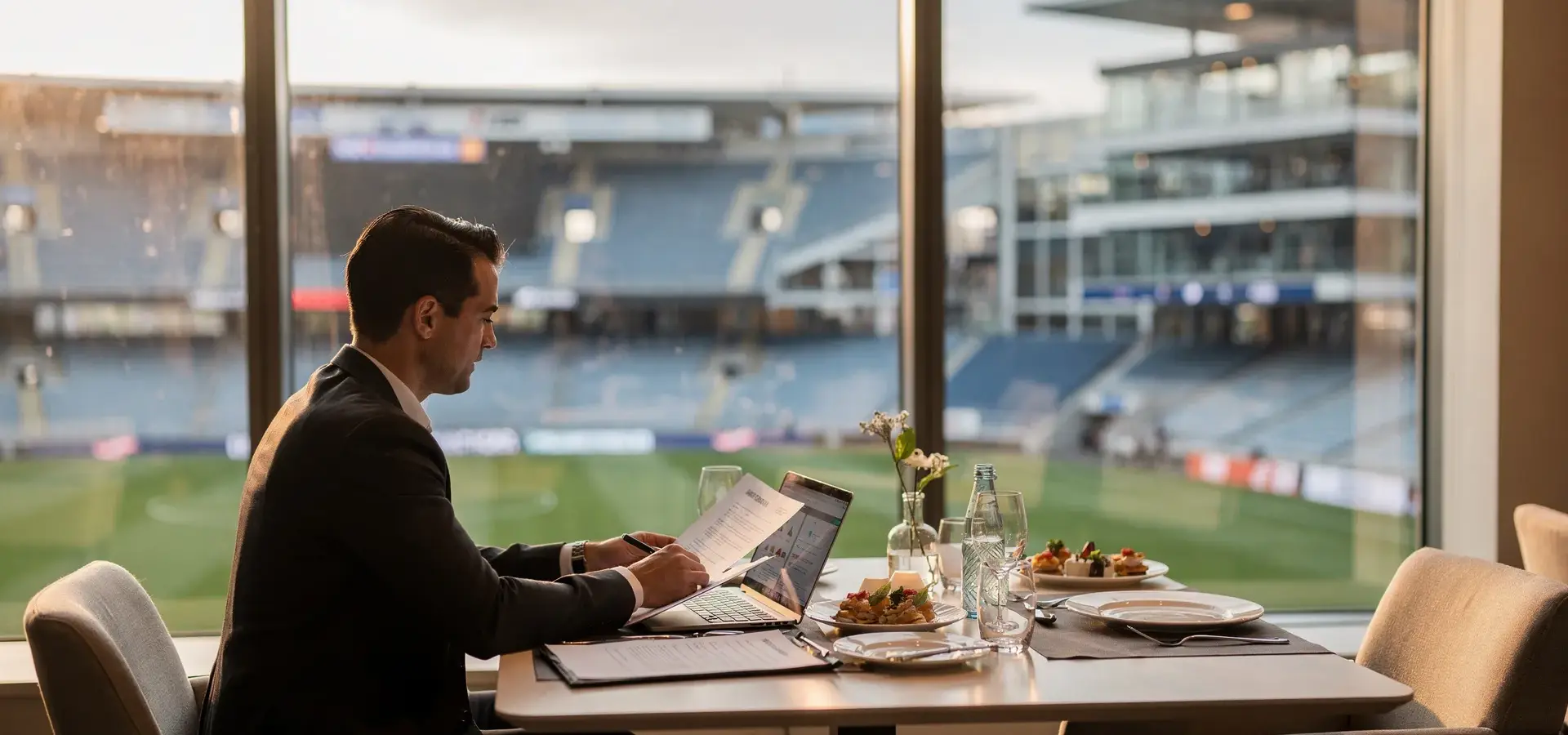
Start with the approval question
Corporate hospitality involves entertaining clients, colleagues, staff, or other relevant stakeholders to impress, reward, and/or network. A private suite rental gives your group exclusive access to the entire suite, while shared suites and individual suite tickets are rarely offered and are identified when available. That makes a suite a useful fit when privacy, conversation, and a controlled guest experience matter as much as the event itself.
LuxuryVIPSuites.com has been in business since 1992. We help corporate planners assess whole-suite and group options for a specific event, then prepare the details needed for an event-specific inquiry. Start by deciding whether your guest list and hosting purpose justify a private setting; do not begin with a generic national price.
A private suite usually fits when you need to host a defined group together and want more control over the setting than individual tickets provide. NFL suites most often hold 14 to 24 guests, while larger party suites can fit 30 or more; capacity varies by venue and suite type. If your group is smaller, compare a loge box, theater box, club area, or premium lounge before paying for space you will not use.
Define the guest relationship and hosting objective
A corporate hosting objective should identify who you are inviting and what the event is meant to support. Corporate hospitality involves entertaining clients, colleagues, staff, or other relevant stakeholders to impress, reward, or network, and it can support morale, staff retention, new business relationships, and sales. Use that purpose to shape the guest list before you compare suite sizes.
A client-hosting event needs a different approval case from an employee recognition outing. For each invitee, record the relationship, the host from your organization, and the reason the invitation supports the event objective. Luxury suites can function as relationship accelerators when they are managed intentionally and measured rigorously, but companies can struggle to connect suite activity with business outcomes when guest information is scattered across email, spreadsheets, CRM records, and calendar invites.
A useful hosting record should capture invitations, attendance, conversations or follow-up commitments, and the business owner responsible for the relationship. The record does not need to claim that a suite caused a sale or renewal; it gives your finance or department approver a clear way to review what the event was intended to accomplish and what follow-up occurred. Keep the objective concrete: entertain named clients, introduce prospects to account leaders, recognize a team, or give employees a shared experience.
Choose the format that matches group size and privacy needs
The event format should match your group size, privacy requirement, and hosting style. A private suite gives your group the whole room; smaller premium formats can reduce unused capacity, while shared clubs and lounges provide a common hospitality setting without a full private suite. Most suites sit on dedicated levels above the main bowl, often along sidelines or in corners, which usually gives a wider field view, although the exact angle depends on the stadium.
The format comparison below gives you a practical first screen before you ask for pricing.
| Format | Typical group fit | Privacy and setting | Use it when |
|---|---|---|---|
| Private suite | NFL suites often hold 14-24 guests; larger party suites can fit 30+ | Exclusive access to the entire suite | You need one private setting for hosted conversation and a defined guest group |
| Loge or theater box | Often 2-8 guests for smaller premium options; some loge boxes seat 4-12 | Smaller or semi-private setting, depending on the venue | Your guest list is too small for a full suite or needs a compact premium space |
| Shared club or premium lounge | Varies by venue | Shared hospitality area rather than a private room | You want a premium setting without exclusive suite access |
| Larger hospitality space | Some concert hospitality spaces may accommodate 50 or more guests | Larger shared or hosted environment | Your attendance exceeds a traditional suite’s practical capacity |
A private suite is the right starting point when your hosting objective depends on a group staying together in a controlled space. A loge box, theater box, shared club, or premium lounge is a better comparison when the guest list is smaller or when exclusive access is not part of the approval requirement. Select the smallest format that meets the privacy and capacity conditions you actually need.

Stress-test the total against attendance
The cost-per-attending-guest test starts with the full event commitment, not the suite rental alone. Use this formula: total suite, ticket, catering, parking, service, and required operating costs divided by the number of guests you realistically expect to attend. Keep the expected attendance separate from the suite’s maximum capacity so your approval case reflects likely use rather than an optimistic headcount.
Fixed suite charges and minimum spends can make the per-person figure rise when attendance falls. Ask which costs change with headcount and which remain fixed. A suite that looks reasonable at full capacity may be difficult to defend if several invitees decline.
NFL suite capacity varies by venue and suite type, with most suites holding 14 to 24 guests and larger party suites fitting 30 or more. Capacity is not the same as attendance, and attendance is not the same as included tickets. Put the included allotment, any additional-ticket option, and your expected attendance in separate lines on the budget worksheet.
A defensible approval screen should show four numbers: the quoted event total, the expected attending guest count, the resulting cost per attending guest, and the lower-attendance cost per attending guest. Add a short explanation of the hosting objective beside the arithmetic. That combination lets an approver evaluate both the financial commitment and the reason for choosing a private setting.
Identify the event variables that move the quote
A corporate suite quote depends on the event, opponent or performer, day of week, date, venue, suite size, location, amenities, and included ticket allotment. Suite pricing varies based on opponent, day of week, suite size, suite amenities, and suite location. Give those details together; a venue name without an event date or expected attendance is not enough for a useful comparison.
Published venue examples show why a generic national price should not become your approval figure. At AT&T Stadium, a Cowboys home-game suite typically runs $12,000 to $50,000 per game for the 2026 season, with catering billed separately. D.C. United suite pricing can range from $4,000 to $13,000 and varies by suite type, location, and opponent. Madison Square Garden suites for New York Rangers games cost between $7,000 and $24,000; location, the popularity of the away team, and division rivalries affect the cost.
The included ticket allotment can change the economics even when two options serve the same event. Private luxury suites for SoFi Stadium events come with anywhere from 8 to 40 tickets included, based on suite size; some rentals include standing-room-only tickets, while others allow additional tickets to be purchased.
Prepare these inputs before asking for a number:
- Venue, event, opponent or performer, and event date
- Expected attendance and maximum possible attendance
- Preferred suite size, location, privacy level, and ticket count
- Parking, club access, catering, dietary, and beverage requirements
- Budget ceiling and the date by which your approver needs a written comparison
These inputs let you compare like with like instead of treating different suite packages as interchangeable.
Reconcile package lines before comparing totals
The listed AT&T Stadium suites open two hours before kickoff, and catering for those options is provided by Legends and billed by event. Treat arrival access and catering as separate lines in your comparison because neither the opening time nor the caterer tells you whether food and drinks are included in the suite price. Ask for the menu scope, ordering deadline, delivery or setup charges, and event-day contact.
Big Ten Championship Football hospitality suites illustrate the need to confirm food terms directly: catering is not typically included in the suite price. If catering is not included, food can be purchased from venue-provided suite caterers or concession stands, and outside food and beverages are not allowed inside the suites or venue. Apply those conditions to that event only; use them as questions for other venues, not as a universal package rule.
Catering should appear as its own budget category. At AT&T Stadium, in-suite catering is an additional cost in most cases, and many groups budget around $150 per person for food and drinks, although catering is optional. General suite-catering guidance gives a range of $35 per person to $150 per person depending on what you order; venues may charge an additional 15-20% in service fees on the catering charge, and gratuity is not included. At AT&T Stadium, also factor in parking, concessions, and souvenirs.
Place each catering proposal in one shared scope worksheet before comparing totals. Keep catering separate from the suite price so the approval worksheet shows which amount is fixed and which is event-specific.
Resolve payment, cancellation, and confirmation terms
The approval record should answer when money is due, what happens if the event changes, and which details become binding. Review the payment schedule, cancellation and refund policies, damage responsibility, vendor requirements, and deadlines for final payment, room lists, and catering in the venue contract. A deposit may be nonrefundable under one clause while a separate cancellation clause sets penalties by timing.
AT&T Stadium provides one specific payment example: the suite rental itself is due in full at the time of purchase. Do not transfer that condition to another venue without written terms. Instead, ask whether payment is due in full, whether a deposit is used, which charges are separate, and which deadlines apply to catering and guest information.
Suite size and location are not confirmed until the Suite Contract is fully executed and payment is processed. Treat the proposed suite, seat count, location, parking, club access, catering, and cancellation language as separate approval lines. Proceed only when the terms that matter to your event are clear enough for the person approving the expense to evaluate them.
Build the event-specific quote worksheet
Build the event brief around the fields that will populate the approval worksheet and let procurement compare the returned package. Include:
- Expected and maximum guest count, with the likely attending count separated from the maximum
- Client, prospect, employee, or mixed guest purpose
- Privacy, capacity, ticket, parking, club-access, and arrival requirements
- Catering format, dietary needs, beverage expectations, and the specific food or beverage terms requiring confirmation
- Budget ceiling, approval deadline, payment constraints, and cancellation concerns
A booking timeline should follow guest count, season, and menu complexity more than the event label. Events with larger guest counts, multiple vendors, or a highly customized menu need three to six months of lead time; larger guest counts require more staff, rental equipment, and preparation time. Contact caterers at least two months before an event and send the final guest count at least one week before the event.
A 30-person breakfast mixer and a 300-person product launch reception are not on the same booking timeline even though both are networking events. Use the larger or more complex case when setting your internal deadline, particularly if your plan includes multiple vendors or a customized menu. An early brief gives you time to compare the complete package and route the terms through procurement.
LuxuryVIPSuites.com contracts directly with suite owners all over North America to provide suites in the secondary marketplace. Give us the venue, event, date, expected attendance, guest purpose, capacity preference, and hospitality requirements in the first submission. A clear brief helps focus the response on the private-suite options and terms that fit your event.

Submit the worksheet for a private-suite quote
Use the approval worksheet as the gate: compare the quoted total and cost per attending guest with package inclusions and contract terms before seeking approval. Your finance or procurement approver can then judge the event on a complete package rather than a headline suite price. Price, inventory, and inclusions are confirmed per event, and a qualified professional should make the final suitability decision after reviewing the specific arrangement.
LuxuryVIPSuites.com can use your completed event brief to identify the details that need an event-specific response. Have the venue, event date, expected party size, guest purpose, capacity preference, catering scope, and approval constraints ready when you submit it.
What should a corporate planner confirm before requesting a quote?
What does corporate hospitality mean?
Corporate hospitality means a company entertains clients, prospects, colleagues, employees, or other stakeholders to support relationship-building, recognition, networking, or business development. A hospitality suite is one format for that purpose: it gives the invited group exclusive access to a private space rather than individual event seating.
Are food and drinks included in a corporate hospitality suite?
Not necessarily. Confirm the menu, beverages, delivery, setup, staffing, taxes, service fees, gratuity, and event-day contact as separate quote lines.
How far in advance should a company arrange a suite event?
The timeline depends more on guest count, season, menu complexity, and the number of vendors than on the event label. Larger events with multiple vendors or customized menus may need three to six months of lead time; catering guidance recommends contacting caterers at least two months before the event and sending the final guest count at least one week before it.
What should a corporate hospitality suite quote include?
Ask for the event date, venue, opponent or performer, suite capacity, included tickets, expected attendance, location, parking, club access, arrival time, catering scope, dietary accommodations, payment schedule, cancellation and refund terms, and availability. The quote should also identify which costs are fixed and which change with headcount so you can calculate the total commitment and cost per attending guest.
Hosting a group?
Tell us the date and the headcount
We get back to you within one business day with what is available and what each suite costs.
Request a quote