
cincinnati reds suites
Cincinnati Reds Suites: A Decision Guide for Group Fit, Cost, and Quote Requests
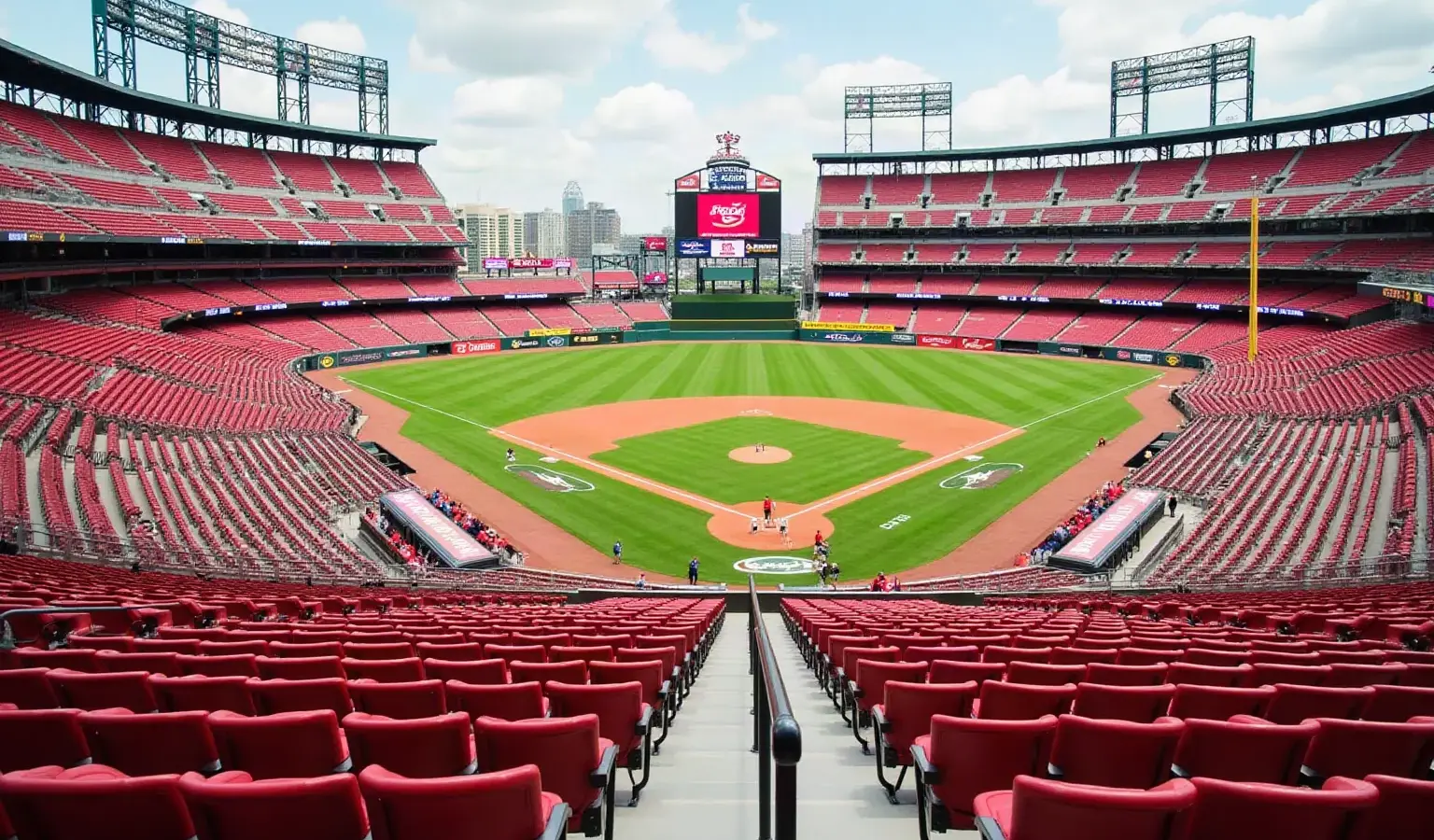
Run two Cincinnati Reds checks before comparing hospitality
Make the decision in two checks: first reconcile actual attendance with the room’s seat and standing-room allocation; then screen the proposed box or section for view obstructions. Compare hospitality and cost only after those two conditions are acceptable.
A Great American Ball Park suite is a private space that can be reserved exclusively for a group, unlike regular game seating. That distinction can support client conversations, team recognition, or a hosted gathering where guests need room to move between watching the game and talking with one another. Regular seating keeps the group in the general bowl, so the event depends more heavily on the shared crowd environment and the available seating arrangement.
An event decision should begin with the experience you must deliver, then use the proposed location to test whether that experience is realistic. Define these requirements before you compare prices:
- Conversation: Decide whether guests need to conduct business during the game or mainly watch it together.
- Hosting: Identify whether food service, a private setting, indoor space, or a dedicated hospitality area matters to the occasion.
- Baseball view: Set a minimum standard for seeing the pitcher and batter, and identify whether a foul-pole or glass-partition issue would undermine the experience.
- Group interaction: Decide whether guests will remain in their seats or circulate between indoor and outdoor areas.
- Approval boundary: Establish the highest acceptable total cost and the terms that must be settled before payment.
Boxes 4 and 10 have a foul-pole obstruction, while boxes 3 and 9 are not completely clear. Use those box descriptions as a starting point for review, not as a universal ranking for every guest preference.
Write the experience brief before comparing options
An experience brief turns a general request for a Reds outing into requirements you can use in a quote comparison. Write the brief before looking at a particular room so an attractive price does not decide the event before you have defined what the guests need.
Include the following:
- Occasion: State whether the event is client entertainment, employee recognition, a team gathering, a sales meeting, or another corporate purpose.
- Attendance: Record the expected number of guests, the realistic minimum, and the realistic maximum. Include likely late arrivals, cancellations, and guests who may attend only part of the game.
- Guest mix: Note whether the group includes clients, executives, employees, families, or guests with mobility, access, or hospitality requirements that affect the format.
- Interaction level: Specify whether private conversation is central to the event or whether the group primarily wants shared game viewing.
- Viewing preference: Describe the required sightline, tolerance for indoor viewing, preference for outdoor seating, and concern about obstructions or glass.
- Hospitality requirement: Identify whether catering, a suite attendant, a private restroom, parking, televisions, or other features are required rather than merely desirable.
- Financial boundary: Set the approved range and list costs that must be separated from the suite price, such as catering, parking, taxes, service charges, or other event expenses.
Guest priorities should be ranked instead of listed as if every requirement carries equal weight. A client-hosting event may place privacy and conversation first, while an employee outing may place shared energy, clear sightlines, and flexible attendance first. A group that wants continuous baseball viewing may value the proposed box location more than a larger indoor area. A group that expects guests to network may need the room and hospitality arrangement to carry more weight than the exact row or box number.
A budget priority should also be explicit. If the primary objective is private conversation, compare the cost of that privacy with the number of guests who will use it. If the primary objective is watching baseball together, make the sightline a pass-or-fail condition before considering extras. If hospitality is the main purpose, require a written description of catering, access, service, and seating before treating the package as comparable.
Use the brief to create a short decision rule: approve a private suite only if the proposed format accommodates the expected group, meets the required viewing and hospitality conditions, and remains acceptable after event-specific terms are included. If any one of those conditions is unresolved, keep the option in review rather than treating a preliminary price as an approval case.

Compare private hosting with shared premium and regular seating
A private suite changes the way your group uses the venue, while regular seating changes the level of privacy and hospitality available during the game. The following comparison gives you a practical starting point without treating any format as automatically suitable.
| Decision criterion | Private suite | Regular game seating |
|---|---|---|
| Privacy | A private space can be reserved exclusively for your group. | Guests sit in general seating with other spectators. |
| Food service | Customized catering is described as an available suite option. | Guests use concession stands. |
| Weather | An enclosed suite can protect guests from outdoor weather. | Regular seating is exposed to outdoor weather elements. |
| Indoor and outdoor space | Suites include climate-controlled indoor lounges with balcony-style outdoor seating. | General seating usually does not include indoor lounge access. |
| Atmosphere | Suite viewing is described as controlled, intimate, and conversational. | Regular seating is described as loud and chaotic. |
| Customization | Suites offer flexibility for branding, promotion, and event customization. | Official branding or promotion is not allowed in regular seating. |
| Cost position | Suites are more expensive because of privacy, premium amenities, and an enhanced atmosphere. | Regular tickets are more affordable but offer fewer comforts and amenities. |
Shared premium seating belongs in the comparison when you want more than ordinary tickets but do not require an exclusive room. Treat that category as a separate package rather than assuming it includes suite-level privacy, catering, indoor space, parking, or guest controls. Ask for the exact seating location, access rights, food and beverage terms, ticket quantity, and restrictions before placing a shared option beside a private suite in the same budget comparison.
The seating choice should follow the event objective. Choose a private format when private conversation, hosted service, and a dedicated group setting are essential conditions. Choose regular seating when the shared crowd environment is acceptable and the group values a lower ticket cost over dedicated hospitality. Keep shared premium seating under consideration when your requirements fall between those two formats, but approve it only after the package answers the same decision questions.
A private suite is not automatically the right answer for a group that wants to watch every pitch from the same position. A regular ticket is not automatically adequate for a client event that depends on private discussion. Use the experience brief to identify which tradeoff your event can accept.
Reconcile attendance with seats and standing-room access
LuxuryVIPSuites.com offers suites that hold 12-30 guests and are rented as one private room; confirm the capacity for the specific option. That range is a screening point, not a promise that every available suite will fit your group or provide the same number of seats, standing-room positions, or included tickets.
Traditional Great American Ball Park suites have an occupancy of 12 to 16 guests. Most Great American Ball Park suites include 12 stadium seats and up to 4 standing-room-only tickets. A Cincinnati Reds suite listing states that 12 tickets are included, with an additional 4 optional standing-room-only tickets. Confirm the ticket allocation and room arrangement for the specific game; these figures do not establish the arrangement for every room or game.
A room-fit test asks how the group will occupy the space, not merely whether the nominal ticket count reaches the advertised capacity. Run the test in four steps:
- Estimate actual attendance. Use a realistic expected number rather than the maximum invitation list.
- Separate seated and standing guests. Identify how many guests need a stadium seat and how many could use standing-room access without reducing the quality of the event.
- Map arrival patterns. Consider whether guests will arrive together, leave early, or rotate through the room during the game.
- Check the room against the occasion. Decide whether a lightly occupied private room still supports the event objective or whether another format would use the budget more effectively.
A group that is smaller than the quoted room capacity may still value privacy, but you should make that a deliberate choice. A group near the upper limit should ask how the capacity is divided between seats and standing-room access before treating the room as a comfortable fit.
Attendance planning also affects invitations and day-of controls. Keep a guest list that distinguishes confirmed guests, alternates, and people who may arrive separately. Ask how tickets are distributed, whether every guest needs the same entry credential, and how late substitutions are handled. Do not assume that an unused ticket can be transferred freely or that a standing-room position provides the same experience as a stadium seat.
The direct action is simple: compare expected attendance with the specific room’s confirmed capacity and ticket allocation, then reject the option if the group would be materially over capacity or if too many guests would depend on an arrangement they did not expect.

Clear the sightline gate before comparing suite extras
Sightline review should happen before you compare hospitality extras. A suite can meet the privacy requirement and still fail the event if guests cannot comfortably follow the game. Ask for the proposed box or section, identify the viewing direction, and assess whether your guests will accept any obstruction, partition, or indoor viewing limitation.
Boxes 4 and 10 have a foul-pole obstruction toward home plate, while boxes 3 and 9 are not completely clear. The same guidance identifies boxes 5, 6, 11, and 12 as its best boxes, followed by boxes 1, 2, 7, and 8. Those descriptions are useful comparison points, but your own group’s tolerance for an obstruction remains the deciding condition.
A clear glass partition is in the front of each referenced section, and some fans might not enjoy watching the game through glass. If your guests include clients or senior attendees who expect an unobstructed view, treat those details as approval questions rather than minor preferences.
A practical sightline check should answer these questions:
- Can guests see both the pitcher and the batter from the primary viewing position?
- Does a foul pole, netting, glass partition, railing, or another feature affect the view?
- Does the proposed indoor or outdoor position change what guests can see?
- Is the 3D virtual venue available for the proposed box or section?
- Would the group accept the location if the view is adequate but not fully clear?
If the only choices are boxes 3, 4, 9, or 10, check the Reds 3D virtual venue for a representation of the view before purchasing. Use the visual review to make a documented accept-or-reject decision, not to justify a preferred option after the price has already driven the choice.
Audit the hospitality package and guest controls
Suite inclusions can shape the event as much as the room itself. In-suite catering options, climate-controlled seating, indoor and outdoor seating, and HDTVs may be available; confirm the specific suite’s inclusions before purchase. A selected listing also says suites include indoor and outdoor seating and HDTVs indoors and outdoors, while another says guests can order an in-suite catering package. These descriptions do not establish identical arrangements for every suite.
The official Reds luxury-suite page lists a private space with a personal suite attendant, wider padded seats, a private restroom, 16 tickets, and 3 complimentary CRG parking passes. The same page is a useful reference for questions about a specific official package, but the listed features still need to be matched to the room, game, and agreement you are considering.
Entry controls can affect guest experience and substitution planning. The official Reds page says ticketed guests in luxury suites are wrist-banded upon entry, and wristbands are non-transferable to other individuals. Build that rule into your arrival plan: assign a contact for guest questions, decide how the host will handle staggered arrivals, and avoid promising a late replacement access unless the applicable terms allow it.
A package-audit checklist should record the answer to each item in the quote or agreement:
- Number of included tickets and the distinction between stadium seats and standing-room access.
- Indoor and outdoor seating locations, televisions, restroom access, and suite-attendant service.
- Catering menu, ordering deadline, service charge, taxes, minimums, and whether food is included or purchased separately.
- Parking quantity, parking location, and whether parking passes apply to the particular event.
- Entry process, wristbands, transfer restrictions, guest substitutions, and arrival instructions.
- Seating view, box or section identifier, screening or obstruction details, and access to any club or lounge area.
- Payment schedule, deposit conditions, cancellation terms, rain-date treatment, and refund rules.
Mark each item as included, available at an added charge, unavailable, or still unresolved. Do not turn an advertised feature into part of the event plan until its status is clear for the exact option.
Reconcile the quote with the event’s financial and contractual exposure
Published Great American Ball Park pricing in one listing ranges from $3,000 to $9,000 per private suite, while club seats are listed at $100 per ticket to $800 per ticket. The listing says pricing varies by matchup, location in the stadium, seating option, and requested services. These figures are a screening band only; obtain game-specific pricing before approval.
Our price depends on the game, suite, and day of the week, and we quote every date individually. A quote should therefore be evaluated as a complete event package rather than as a fixed price attached to the phrase private suite. Separate the room price from catering, parking, taxes, service charges, deposits, and any other requested services.
A Great American Ball Park listing reports 50+ luxury suites at the venue, with capacities of 12-99 guests. That reported venue-wide range is broader than the 12-30 guest suites LuxuryVIPSuites.com offers on its selected page, so do not use the larger figure to assume that a particular option will accommodate your group.
The hospitality agreement states that sales are final and are not refundable or exchangeable except under the game-cancellation policy. If a game is canceled before patrons may enter the ballpark, the account holder and the Reds are to use good-faith efforts to identify a mutually agreeable rain date. If no mutually agreeable rain date is identified under the selected provision, the account holder is entitled to a full refund of the specified amounts within thirty (30) days of a written request.
A quote approval worksheet should put the commercial and contractual terms in one place:
- Record the game, date, proposed box or section, confirmed capacity, included tickets, and sightline conditions.
- Record the private-suite price and every separate cost, including requested services and any food or beverage charges.
- Calculate the effective cost per expected guest using the attendance estimate from your experience brief, while keeping the total event cost visible.
- Identify the deposit, payment deadline, final-sale rule, cancellation treatment, rain-date process, refund conditions, and written-request requirements.
- Mark unresolved terms and assign each question to the person who must answer it before approval.
Approve the option only when the total cost and the downside of the contract terms fit the event’s financial authority. A lower preliminary figure is not a lower event cost if required hospitality or access items remain outside the quote.
Seek professional evaluation when material risk remains unresolved
Field-object exposure matters when your guest group includes people who need a particular screening arrangement or when your organization has a defined event-safety standard. Fans in some seating sections remain exposed to bats, bat fragments, and thrown or batted balls, and the ticket holder assumes all risk of injury. Treat the seating and screening description as an operational question that must be answered before you approve the location.
The Reds seating guidance says the ticket holder assumes all risk of injury from objects leaving the field of play. For information about netting or screening coverage and seating options, contact the Cincinnati Reds ticket office at (513) 765-7500. Ask about the exact proposed section, not only the venue generally, and record the answer with the quote materials.
Contract review deserves the same discipline as seating review. Escalate the agreement to your organization’s appropriate legal, procurement, finance, or risk reviewer when the final-sale rule, cancellation treatment, deposit, refund language, guest-access control, or safety exposure could affect approval. Keep the option on hold while a material condition remains unanswered.
A clear boundary makes the next action easier: proceed to the quote stage when the room, sightline, hospitality package, guest controls, price, and contract terms are sufficiently defined for your organization. If any unresolved issue could change the event’s suitability or financial exposure, obtain the relevant answer or review before accepting the arrangement.
Send the two-check result with the quote request
Use the Reds-specific screen in order: reconcile actual attendance with the room’s seat and standing-room allocation, then reject a proposed box or section that fails the group’s sightline requirement before comparing hospitality terms. Carry the experience brief, room-fit result, sightline decision, package audit, and contract questions into the next step so the conversation produces an answerable event proposal rather than a generic price.
A complete inquiry should include:
- Great American Ball Park and the specific Reds event or game you are considering.
- The game date, preferred date range if flexibility exists, and expected party size.
- The occasion, guest mix, and whether the event is for clients, employees, or another corporate group.
- The required seating view, indoor or outdoor preference, privacy level, catering needs, parking needs, and any access or screening questions.
- Your budget boundary and the costs that must be separated from the suite price.
- The name, company, phone number, email address, and any timing constraints needed for a useful response.
A qualified professional within your organization should decide whether unresolved legal, safety, financial, or contractual issues permit approval. Keep the inquiry as a request for a game-specific quote, not as a confirmed booking or a promise that inventory, price, or a particular configuration will be available.
We ask for the event, date, and party size, and recommend planning on about 3 weeks of lead time. Add the experience brief and open questions so the proposed option can be evaluated against your actual guests and event purpose.
What should you confirm before accepting a Cincinnati Reds suite quote?
Are food and drinks included with a Cincinnati Reds suite?
Not necessarily. Suite descriptions may offer in-suite catering or the ability to order a catering package, but the specific agreement should state whether food and beverages are included, optional, subject to minimums, or charged separately. Confirm menus, ordering deadlines, taxes, service charges, and any applicable restrictions before approval.
Is a Cincinnati Reds suite practical for a small corporate group?
It can be, if privacy, conversation, and hosted hospitality justify reserving a private room. However, many traditional suites are described for roughly 12 to 16 guests, and suites offered through LuxuryVIPSuites.com may hold 12-30 guests. Compare the expected attendance with the confirmed ticket allocation and decide whether the group would use enough of the space to support the cost.
What should be confirmed about the view before accepting a Reds suite?
Confirm the specific box or section, whether guests can see the pitcher and batter, and whether foul poles, glass, railings, netting, or other features affect the view.
What happens if a Cincinnati Reds game is canceled?
The applicable hospitality agreement controls the result. Under the hospitality agreement, if a game is canceled before patrons may enter, the account holder and the Reds are to use good-faith efforts to identify a mutually agreeable rain date. If no agreement is reached, the account holder may be entitled to a full refund of specified amounts within 30 days of a written request. Sales are otherwise final except as provided by the game-cancellation policy.
Hosting a group?
Tell us the date and the headcount
We get back to you within one business day with what is available and what each suite costs.
Request a quote