
What is the best place for event suites in the United States?
How to choose a U.S. event suite for client hosting
Start with the hosting outcome
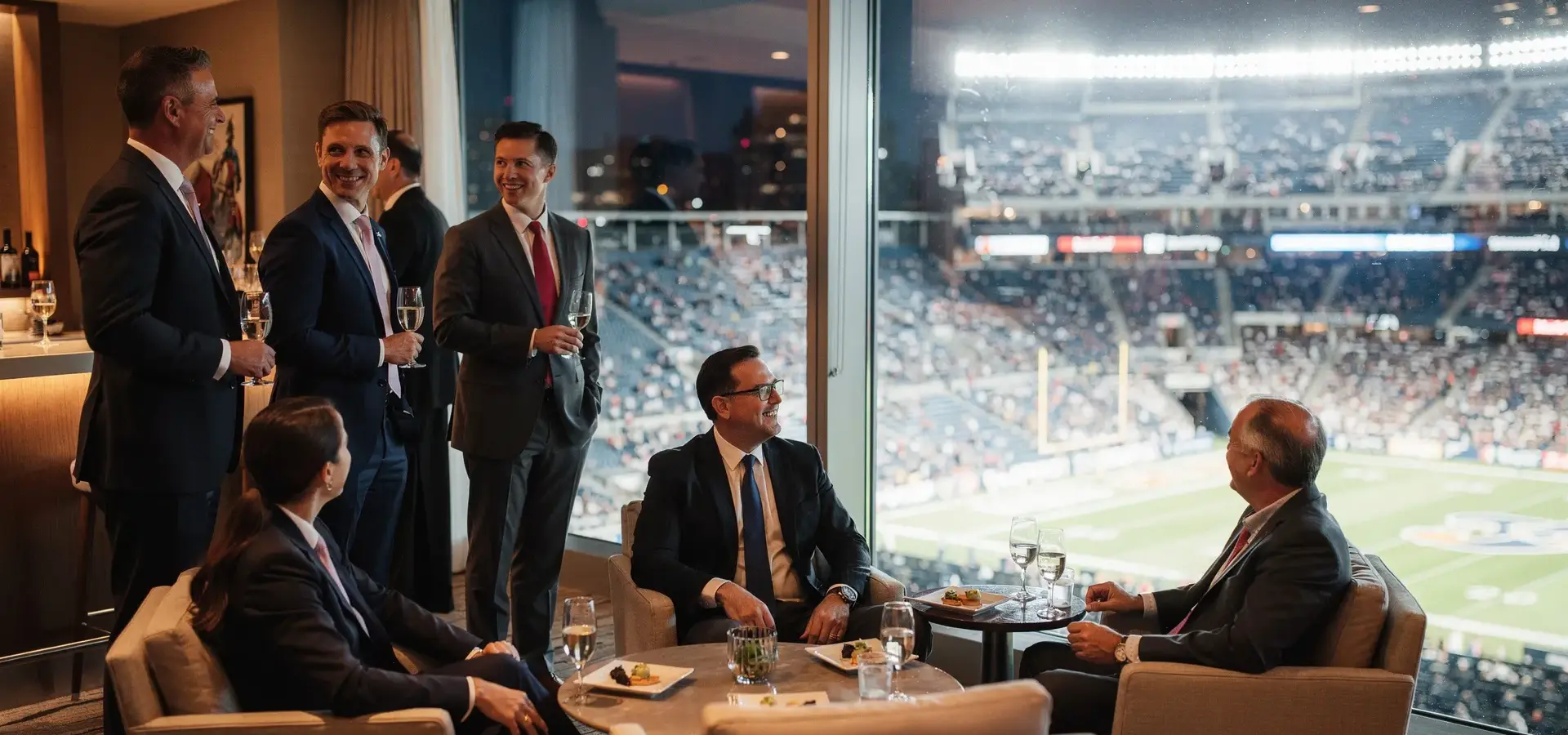
The strongest U.S. event-suite choice depends on the hosting outcome, not on a suite label alone. Choose the event experience first, then compare guest count, privacy, hospitality, access, timing, and total cost. Luxury suites are private seating sections in venues that provide the best views of events. Your approval standard should be simple: the price, rules, schedule, access, and responsibilities must be clear enough for you, the venue team, and any vendors to work from the same plan.
LuxuryVIPSuites.com gives you a quote-request path for a defined event brief, and we have been in business since 1992. For a 10-30-person client group, begin by deciding whether the occasion needs a quiet setting for conversation, a high-energy shared experience, or a marquee sporting-event atmosphere. That decision narrows the useful options before you spend time comparing suite locations.
Use this order when you build the shortlist:
- Name the event and hosting objective.
- Set the real guest count, including likely changes.
- Decide how much privacy and conversation space you need.
- Separate included hospitality from items charged separately.
- Request an event-specific quote with written terms.
Prime venues in major markets book 12-24 months in advance, so the event date belongs in the first conversation rather than at the end of your comparison.
Match the event type to the guest experience
MLB, NHL, and concert suites create different hosting conditions even when the seating is private. MLB teams play 81 regular-season home games, and suite rentals are often more accessible than those in other major professional sports. Match the event’s energy to the relationship you are hosting: a game can support intermittent conversation, while a concert creates a more programmed evening around the performance.
The available planning ranges point to different budget conversations:
| Event type | Price reference | What the range means for your decision |
|---|---|---|
| MLB single-game suite | Typically $2,000 to $18,000+, with most between $4,000 and $8,000 | A regular-season game may give you more dates to compare before you commit to a guest-facing occasion. |
| NHL single-game suite | Typically $2,000 to $15,000+, with most between $4,000 and $8,000 | Premium opponents and weekend games generally cost more; the cited range excludes playoff pricing. |
| Concert suite | Some cost a few thousand dollars, while premium suites for sold-out tours and major performers can exceed $20,000+ | Artist, venue, suite location, and event demand should be treated as separate quote variables. |
For an MLB occasion, start with the relationship objective and then test several regular-season dates if your hosts have flexibility. For an NHL occasion, compare the opponent and day of week before assuming two games offer similar value. For a concert, identify whether the performance itself is the main gift or whether your guests need enough quiet time to talk before and during the event. Choose the event type that supports the conversation you want, then request the suite.
Use event type as an early filter rather than as the final decision. A regular-season MLB game may suit a relationship-building evening with flexible scheduling. An NHL game may fit when the opponent and atmosphere carry weight, but premium opponents and weekend games generally command higher prices. A major concert may suit a once-a-year client invitation when the performance is the central experience, with the cost driven by the artist, venue, suite location, and demand.
Use a 10-30-person group to choose the format
For 10-30 guests, capacity matters alongside the number who need seats, the movement the event requires, and whether food service or conversation matters more than enclosure. A 12-person client dinner and a 28-person prospect reception may need very different layouts even when both fit within a suite’s stated maximum.
These formats illustrate the main trade-offs:
| Format | Group and space facts | Hosting fit |
|---|---|---|
| Levi’s Stadium event suite | Includes 16 tickets and 4 SROs, has a maximum capacity of 22 guests, and provides 12 theater-style seats plus 4 barstools facing the event. It also includes a private interior space. | A 10-16-person list would use the ticket allotment in this example; a larger group up to 22 would need a plan for the standing-room positions and the event’s actual terms. |
| Named Target Field suites | Premier, Mauer, Killebrew, Puckett, Closer, Event, and Skyline Suites include a food-and-beverage package with ballpark favorites, non-alcoholic beverages, and drink coupons for beer and wine. | Use this direction when included food and beverage service is central to the client experience. Additional menu options are available for an extra cost. |
| Truly On Deck at Target Field | The outdoor hospitality option serves groups of 20-104 guests. Each ticket costs $75 - $128 and includes reserved patio seating with a drink rail, views of Target Field, and a $30 food-and-beverage credit. | For a 20-30-person group, this can fit a casual outdoor objective when a full private interior suite is not required. |
Choose the private suite when your guests need a controlled setting and a defined place to talk. Choose a food-inclusive suite when reducing separate hospitality decisions matters to your approval process. Choose an outdoor hospitality format only when its seating, service style, and privacy level match the occasion; do not treat a lower ticket figure as an equivalent replacement for a private room.
Compare the experience guests will actually use
Our luxury suite ticket holders receive VIP amenities such as best parking passes, exclusive suite entrances, and exceptional catering. Luxury suites can also provide exclusive access to indoor venue areas, including private club entrances, special restaurants, merchandise stands, and lounge areas. For client hosting, these details affect the arrival experience and how easily guests can move between conversation, food, and the event.
Sightlines should influence every seating decision in a hospitality suite with a screen or live stage feed. Position sofas and chairs so guests can watch without turning awkwardly away from the conversation, and use low-profile tables and appropriately scaled lounge pieces to help maintain visibility across the room. Ask for the actual seating arrangement rather than approving a suite based only on its capacity.
A dedicated suite attendant takes food and beverage orders in both private and shared suites during the event. Ask whether the package covers the menu you need, whether alcoholic and non-alcoholic options are handled separately, and whether guests order individually or receive a planned spread.
Compare each option across four practical experience tests:
- Can you greet guests without a confusing arrival route?
- Can guests see the field, stage, or screen while speaking with you?
- Can the food and beverage setup support the length and tone of the occasion?
- Can guests use the interior and club areas without unclear access rules?
A suite that answers those questions clearly is more useful for executive hosting than a larger space whose operating details remain vague. The physical room, the arrival route, and the service pattern all shape how much attention you can give your guests.

Build the approval view around total event value
The approval number should show what the event costs per guest and what the group receives for that total. At Levi’s Stadium, suite prices range from $15,000 to $50,000 depending on the event, suite availability, and suite type. A Levi’s Stadium suite reservation includes tickets in a private suite and parking passes in premium lots.
For a simple planning calculation, a $15,000 suite divided among 10 invited guests is $1,500 per guest. Using the 22-guest maximum in the cited Levi’s Stadium example, the same $15,000 total is about $682 per guest, while a $50,000 total is about $2,273 per guest. These calculations show why the guest count and usable capacity belong in the approval view alongside the headline suite total.
Levi’s Stadium suite pricing varies with the opponent, day of week, suite size, suite amenities, and suite location. Separate those variables in your comparison instead of treating one total as a universal price for the venue. Your finance or leadership review should see:
- Total suite or ticket cost.
- Cost per invited guest.
- Included tickets, parking, food, beverage, and access.
- Any separately priced menu or service items.
- The seating and privacy conditions attached to the capacity.
Approve the option whose total can be explained in the same terms as the hosting objective.
A headline total can look different when the invitation list changes. If 10 people attend, the cost per person may be high even when the suite is well suited to private conversation; if 22 people attend, the same room may spread the total more widely but create a busier experience. Treat cost per guest as one approval measure, then weigh it against privacy, usable seating, included hospitality, parking, and the value of the event itself.
Begin the search on a workable timeline
The search-and-coordination window should reflect the event’s demand and your guest list. Suite availability at Levi’s Stadium is limited, and suites are often unavailable at the last minute. Coordinating a group event there can also require more time for guests to confirm their availability. Start earlier when the date, venue, opponent, artist, or guest list is difficult to change.
Use these lead-time ranges to set your first outreach point:
- Most events: 6-12 months ahead.
- Large conferences and popular venues: 12-18 months may be needed.
- Prime venues in major markets: 12-24 months ahead.
- Smaller corporate events: 2-3 months might be enough when availability permits.
- Holiday parties and year-end celebrations: 6-12 months ahead; December dates can fill by summer.
Use the longer end of the range when your date is fixed or your guest list includes people whose calendars are difficult to coordinate. Use flexibility in dates, event type, or venue only when the hosting objective still works.
A B2B event team targeting a 600-person San Francisco conference began its venue search eight months before the target date. That example is larger than your 10-30-person client group, but it shows why a fixed marquee date should trigger outreach early. Give guests enough time to respond, keep alternative dates available when possible, and attach setup, the event itself, and vendor cleanup to the date you request.
Your first outreach does not need every guest name, but it should include the event, preferred date, estimated party size, and hosting objective. That gives you a basis for checking inventory and usable capacity before you build invitations. If the event is a marquee occasion, do not wait until the final guest list is complete to find out whether the preferred format is available.

Turn the shortlist into a quote brief
A quote brief should let you compare two or three viable options without going back to fill basic gaps. Put the following questions into your request:
- Is your preferred date open, and what alternative dates are available?
- Does the date cover setup, the event, and vendor cleanup?
- What is the comfortable capacity for your guest count and intended layout?
- Does capacity change with the room setup or event format?
- Does every guest have the ticket or access required to enter the suite?
- What parking, valet, rideshare, and arrival instructions should you send?
- What catering, beverages, tickets, parking passes, and other inclusions are part of the package?
- What charges relate to duration, setup, cleanup, attendance, or menu changes?
- What curfews, noise rules, end times, and late-running charges apply?
Only guests with Alamo Bowl suite tickets may enter an Alamo Bowl suite, and venues monitor suite capacity very closely. Use that specific boundary as a reminder to obtain the access rule and capacity rule for your own event.
Your guest plan should include practical arrival and mobility questions. Ask where guests should park, whether valet is available, and where rideshares should drop off. If the venue is on a second floor, ask how guests with mobility needs reach the event floor, then check routes between entrances, tables, stages, and restrooms after the furniture is arranged. Keep the route open after chairs, tables, food service, and other event furniture are in place.
The timing risk is concrete in a 600-person San Francisco conference example: the team began eight months ahead, yet by the third week of outreach its preferred hotels and convention centers were fully booked, quoting rates 40% above the original budget, or offering compromise dates in the off-season. The team ultimately secured a venue at 12% above its original rate budget, in its third-choice neighborhood, on dates 11 days later than its preferred week, with a budget difference of roughly $35,000. A smaller client group may face different conditions, but the example supports keeping alternative dates and venues in the brief.
Send the same brief to every option you are comparing. Ask each one to identify the suite or format, usable capacity, ticket or access rules, catering package, parking, total fees, timing rules, and payment or change terms. Matching the questions makes it easier for you to explain why one option fits the hosting plan and another does not.
Resolve unclear terms before approval
Accessibility belongs in the event decision before you approve the suite or send invitations. For an accessible seating plan, check for aisles at least 36 inches wide and sufficient turning space, such as a 60-inch-diameter circle, in key locations. Check the route from the entrance to seating, food service, restrooms, and any club or lounge area, and confirm that furniture will not close the route.
Ask where restrooms are located, whether guests can reach them without stairs, and how mobility needs are accommodated. The guidance recommends at least four restrooms per 100 event guests, so treat restroom location and access as separate questions from suite capacity. Identify accessible parking and drop-off as part of the arrival plan, not as a detail to solve on event day.
A small weekday private client dinner may need four to six weeks to secure a good private dining room, while Thursdays and Fridays go first. That benchmark can help you recognize when a non-suite fallback still needs planning time, but a marquee event with limited inventory requires its own outreach schedule. If capacity, access, timing, catering responsibility, or payment terms cannot be explained clearly, pause approval and obtain a written answer before you invite clients.
The final option should be the one whose price, rules, schedule, access, and responsibilities you can explain clearly enough for the host, venue team, and vendors to work from the same plan. If a material term changes between the quote, the invitation, and the event-day instructions, resolve that difference before approval. Clear operating details protect the hosting plan from avoidable surprises.
Request a quote for the defined event brief
A quote is ready to request when you can state the event, date, venue, party size, hosting objective, budget range, and required inclusions in one brief. We contract directly with suite owners across North America to provide suites in the secondary marketplace. Include the guest access, seating, catering, parking, mobility, and timing questions that determine whether the option fits your client-hosting plan.
Before you approve an option, make sure the event-specific response identifies the available suite or format, usable capacity, guest access, included hospitality, total price, and operating terms. Price, inventory, and inclusions are confirmed per event. If your organization has gifting, accessibility, or approval requirements, a qualified professional or internal approver should decide individual suitability before you proceed.
Send the defined brief to LuxuryVIPSuites.com when you are ready to move from comparison to the next step. Include the event date, venue or event, party size, occasion, hosting objective, budget range, and the details your approver needs to evaluate the complete plan.
What should you confirm before requesting an event-suite quote?
Does every guest need a suite ticket to enter?
Entry rules are event-specific, so confirm them before sending invitations. At the Alamo Bowl, only guests with suite tickets may enter the suite, and the venue closely monitors capacity; use the same check for your event’s ticket, access, and guest-count rules.
Is food and beverage always included with an event suite?
No single inclusion rule applies across events. At Target Field, the listed Premier, Mauer, Killebrew, Puckett, Closer, Event, and Skyline Suites include ballpark food, non-alcoholic beverages, and beer-and-wine drink coupons, while additional menu options cost extra. Ask for the exact menu, beverage package, service format, and separately priced items for the suite you are considering.
How far ahead should I start arranging a client-hosting suite?
Begin as early as the date and guest list allow. General venue guidance suggests 6-12 months for many events, 12-18 months for large or popular venues, and 12-24 months for prime venues in major markets; smaller corporate events might need only 2-3 months when availability permits.
Hosting a group?
Tell us the date and the headcount
We get back to you within one business day with what is available and what each suite costs.
Request a quote