
golden state warriors suites
Golden State Warriors Suites: A Decision Guide to Fit, Inclusions, Cost, and Quote Requests
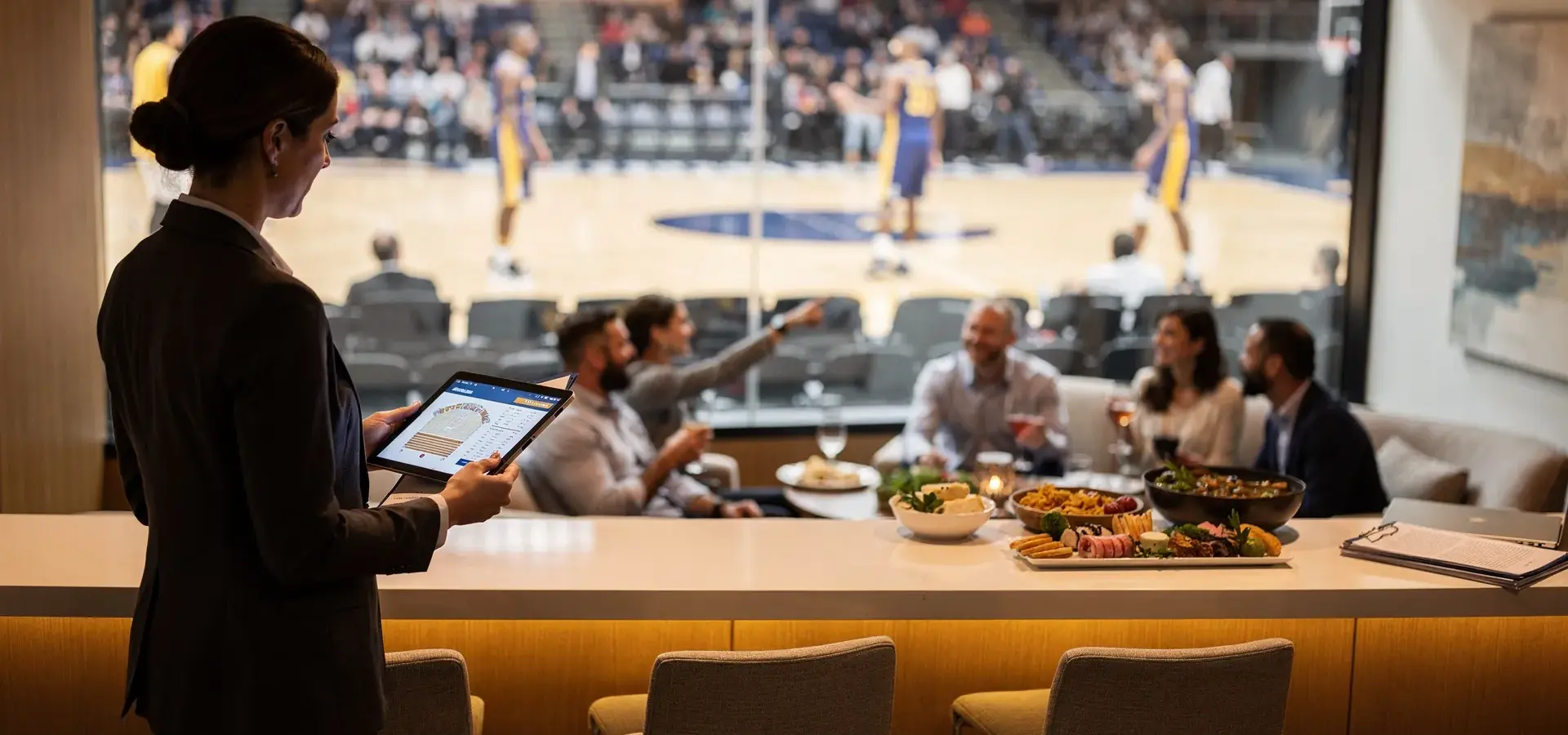
Define the event brief before comparing hospitality formats
Your Golden State Warriors event brief should come before any suite label or headline price. For a Chase Center event, start with the date, expected attendance, occasion, privacy requirement, hospitality preferences, and budget boundary. The game or event, suite, and day of the week affect the quoted suite price, so those details belong at the beginning of the decision rather than at the end.
Your planning brief should answer these questions:
- Which Warriors game or other Chase Center event are you considering, and what date or date range works?
- How many guests do you expect to attend, and how many are likely to commit?
- Is the occasion a client event, employee gathering, family outing, celebration, or general group experience?
- Do you need one private room, or would premium seating with access to shared hospitality meet the purpose?
- Which matters most: privacy, a shared food-and-beverage package, dedicated service, proximity to the action, arrival convenience, or budget control?
- What total amount can the organization or group approve, and what per-guest amount would make the occasion workable?
A clear brief prevents a mismatch between the space you investigate and the experience you want to provide. It also gives you a useful way to compare a private room with club seating, a Theater Box, or another group arrangement.
Your decision should be based on the complete occasion, not a suite name alone. A group that needs everyone together for introductions, hospitality, and conversation may value a private room differently from a group that mainly wants premium seats for the game. A smaller gathering may need a different configuration from a large corporate outing, while a family group may prioritize food, entry, and seating logistics. Record those priorities before you ask for availability or pricing, then use the same brief for every option.
Choose the experience your group actually needs
Your group’s required experience should determine the hospitality format. A private suite, premium club seating, and a Theater Box can address different priorities, so compare privacy, guest arrangement, service, food, and confirmation requirements together.
| Format | Privacy and guest arrangement | Hospitality details to examine | Practical decision |
|---|---|---|---|
| Private suite | A cited Chase Center rental guide describes one private room rented as a whole rather than by individual seats, with capacity of 12–22 guests. | Multiple configurations may include a personal suite attendant, in-suite catering services, and climate-control options. | Choose this path when group cohesion, private conversation, or controlled hosting matters more than simply securing seats. |
| Premium club seating | Club tickets are a seat-based alternative rather than an assumed private room. The cited club-seat terms describe in-seat service and premium food and beverage options in an exclusive club lounge. | Catering is not available for premium club seats under the cited NBA Finals guidance. | Choose this path when premium seating and lounge service meet the occasion without requiring a private room. |
| Theater Box | A Theater Box is a separate Chase Center product whose exact arrangement and capacity should be confirmed for the event. | Ask for the exact guest count, seating layout, access, and total package before comparing it with a suite. |
Your private-room requirement calls for a suite quote that identifies the room, guest capacity, and included access. Your priority is premium seating rather than shared private space when club seating answers the hospitality brief. Your budget or guest arrangement may point toward a Theater Box, but the specific product still needs an event-level explanation. Individual suite tickets are occasionally available, and a cited listing describes their pricing as comparable to club seating within the area; treat that as an occasional availability statement, not a promise for your event.
Use capacity as the first practical filter
Your expected attendance is the first practical filter for a Chase Center hospitality option. One cited rental guide states that a Chase Center suite holds 12–22 guests and is rented as one private room. A separate Golden State Warriors premium-suite listing advertises options for 4 to 58 people. Because those figures come from different cited listings, neither should be treated as a universal capacity for every suite.
Your capacity review should follow this sequence:
- Count likely attendees rather than the entire invitation list. Include hosts, clients, employees, family members, and guests who may need a seat.
- Separate the number you expect from the maximum number you might invite. A room that fits the maximum may be inefficient if the committed group is much smaller.
- Ask whether the proposed figure refers to guests, tickets, or a product range. The 12–22 figure measures guests in one private room, while the 4–58 figure comes from a broader premium-suite listing.
- Confirm whether the quote covers a single suite, a Theater Box, club arrangement, or another product. Do not plan the floor layout from a general website range.
- Match the confirmed capacity to the event purpose. A client reception may need space for movement and conversation, while a family outing may need a straightforward seat count and clear entry instructions.
Your event date can also change the package presented. For the 2026 NBA Playoffs, Chase Center advertised premium suites with all-inclusive food and beverage and onsite VIP parking included.
Your next action is to put the actual party size in the inquiry and ask for the exact capacity of the proposed configuration. If the response gives only a broad range, pause before inviting guests or promising a layout. Capacity is resolved when the written option identifies the product, private or shared arrangement, permitted guest count, and any difference between the number of seats and the number of people allowed.

Read the hospitality package as a set of separate decisions
Your hospitality package should be read line by line rather than summarized as premium or all-inclusive. Chase Center suites are described as available in multiple configurations and may include a personal suite attendant, in-suite catering services, and climate-control options. A separate rental guide says catering is usually priced separately and that inclusion depends on the venue, suite, and owner.
Your package review should turn each desired feature into a specific question:
- Food and beverage: Is the package for a Warriors game, a concert, or another event? For Warriors games, Courtside Lounges and Club Suites are described as including all-inclusive food and beverage. For concerts and other events, catering in those suites is available to purchase separately. All-inclusive food and beverage is specified as applying to Warriors games only.
- Catering: Ask whether catering is included, optional, ordered in advance, or billed separately. Do not assume that a food-and-beverage statement for a Warriors game applies to a concert or another event.
- Attendant service: Ask whether a personal suite attendant is included in the proposed configuration and what responsibilities that service covers.
- Climate control: Ask whether climate-control options apply to the specific room and event rather than to every Chase Center suite.
- Entry and parking: Parking and entry vary by suite, so ask for the exact access method, parking allocation, and location included with the quote.
Your occasion should set the order of these questions. A corporate host may prioritize an attendant, food service, arrival instructions, and a room that supports conversation. A family group may prioritize included food, accessible entry, and a clear guest count. A concert group should separate concert terms from Warriors-game terms because catering treatment can change by event type. Choose the option only after the features you actually need are tied to the specific product and date.

Build the budget from the total occasion
Your budget should begin with the complete occasion and end with a per-guest view. A cited Chase Center guide states that the price depends on the game, the suite, and the day of the week, with each date quoted individually. That means a general headline number cannot replace an event-specific quote.
Your working calculation can be simple:
Quoted suite or hospitality total ÷ expected attendees = estimated cost per guest
Then add each confirmed separate cost, such as catering, parking, taxes, fees, or purchases outside the package. Use expected attendees for the planning view, but also calculate the result at the minimum group size you can realistically bring. A room that appears acceptable at full capacity may be difficult to justify if only half the guests attend.
The calculation is a planning aid, not a promise of savings or value. Value depends on what your group is trying to accomplish, what the package includes, and how reliably the expected guests will attend.
Your Theater Box comparison has one published reference point: a cited Chase Center listing describes Theater Boxes as a lower-cost option ranging from $1,500 to $4,000. Concert and other event prices also vary with the act and demand, so use the figure as a product-specific reference rather than a universal budget.
The commercial terms matter alongside the headline amount. For Warriors games, one cited listing describes food and beverage as included in Courtside Lounges, Club Suites, and Theater Boxes, while parking and souvenirs may remain additional costs. Ask whether those terms apply to the product and date you are considering before treating the per-guest figure as complete.
Your family attendance count may also depend on the venue’s age policy. A Chase Center venue listing states that children 2 years of age and under do not require a separate ticket for admission. Treat that statement as a venue-specific policy to confirm for the event, and do not count a child under that age as a separate ticket without resolving how the proposed package handles admission and capacity.

Separate venue information from broker and resale information
Your research should distinguish official venue or team information from a broker listing or resale description. Venue and team materials can describe a product, package, or platform, while a broker listing can describe a particular rental path. Neither label removes the need to match the written terms to your event, date, capacity, and budget.
Your resale questions should reflect the type of information available. The Warriors’ suite resale platform enables negotiation between suite holders and buyers. A report published on October 30, 2019, described SuiteXchange as available for owners of 32 courtside boxes and 44 mid-level suites, with the Warriors taking a cut of the resale price. That same report said the Warriors authenticated every transaction and that suite sales were valid only when made seven days before the event.
Your decision should not rely on the 2019 resale terms as if they were current event conditions on November 10, 2026. Ask whether the platform, eligibility, authentication process, timing rule, resale fee, and transaction protections apply to the option being offered now. A historical platform description can help you identify questions, but it cannot establish present inventory, present terms, or a confirmed transaction.
Your action is to label each answer before using it in the decision: venue or team product information, broker listing information, resale information, or event-specific written terms. Give the greatest weight to the written package tied to your event and date. If a listing says a feature is included but the event-specific response does not identify it, treat the feature as unresolved and ask for a corrected package.
Run the confirmation checklist before commitment
Your commitment decision should wait until the written response answers the operational and commercial questions that affect the occasion. Catering is usually priced separately at Chase Center, while parking and entry vary by suite.
Your confirmation checklist should include:
- Event identity: the Warriors game, concert, or other event; the exact date; and the venue.
- Inventory: whether the proposed suite, Theater Box, club arrangement, or other product is available for that event.
- Capacity: the permitted guest count, whether the number refers to seats or people, and whether the space is one private room.
- Location: the suite or seating location, view, entry route, and any restrictions that affect the group.
- Food and beverage: what is included, what must be ordered separately, whether the terms change by event type, and whether drinks outside the package cost extra.
- Parking and entry: the number of parking spaces, garage or access details, ticket delivery, and any separate entry requirements.
- Money: the quoted total, taxes, service fees, catering charges, parking charges, deposit or full-payment timing, and the per-guest calculation.
- Contract terms: cancellation, transfer, resale, guest substitution, payment deadlines, and the consequence of nonpayment.
- Event operations: the contact for changes, the deadline for catering or guest information, and the process for receiving final instructions.
Your commitment gate is straightforward: proceed only when the response identifies the product, capacity, inclusions, complete cost, payment timing, and material contract conditions. If one of those items is missing or conflicts with the event brief, send a focused follow-up rather than filling the gap with an assumption. A quote becomes useful when it can be compared against the same requirements that defined your search.
Prepare a quote request that can be answered accurately
Your quote request should give enough detail for the response to address the actual event rather than return a generic suite description. Chase Center suite guidance recommends planning on about 6 weeks of lead time. That is planning guidance; current availability and any holding terms require event-specific confirmation.
Your inquiry should include:
- Venue: Chase Center in San Francisco, or the exact venue if the event details change.
- Event: the Golden State Warriors game, concert, or other event you are considering.
- Date: the preferred date, plus acceptable alternatives if you have them.
- Party size: the expected number of guests and the minimum and maximum ranges that would still work.
- Occasion: a client event, employee outing, family gathering, celebration, or another purpose.
- Format preference: a private suite, Theater Box, premium club seating, or an informed recommendation between available options.
- Privacy requirement: whether the group needs one private room or can use a seat-based format.
- Hospitality requirements: food and beverage, catering, attendant service, climate control, parking, entry access, or other priorities.
- Budget boundary: a total target or per-guest range, stated as a planning limit rather than an assumption about price.
- Organization and contact details: the person responsible for the decision, company information when relevant, phone number, and email address.
- Decision timing: when you need the response and when your group expects to decide.
Your request will be easier to evaluate when it separates requirements from preferences. State that a private room is required if the group must remain together, but identify whether a Theater Box or premium club seating would be acceptable if the suite does not fit. State the minimum acceptable capacity, the food-and-beverage expectation, and the maximum per-guest amount you can approve. The response can then address the real trade-offs instead of sending a price without context.
About six weeks of lead time is planning guidance; the event date, product, capacity, price, inclusions, and terms require event-specific confirmation. Keep the inquiry open until the written response answers the brief and identifies what is included or separately charged.

Seek professional review when the commercial terms remain unclear
Your organization should pause for a second review when the written package leaves a material commercial or operational question unresolved. The review is not a substitute for an event-specific quote; it is a practical control before a group commits money, invites guests, or represents the package to clients.
Your review trigger should be specific. Escalate the package when:
- the capacity does not match the number of guests you plan to host;
- the proposed product is unclear or changes between messages;
- food, beverage, catering, parking, entry, or service terms are described as included without identifying the event and suite;
- the total does not show taxes, fees, catering, parking, or other material costs;
- payment is required before the decision-maker understands the cancellation, transfer, substitution, or resale terms;
- a historical resale description is being used to explain a present transaction; or
- the written terms conflict with the event brief or with another part of the response.
Your event lead, procurement contact, finance reviewer, or contracts adviser can compare the package against the approved brief. Ask that person to mark each requirement as confirmed, separately priced, unavailable, or unresolved. Request a corrected written response when the package does not use consistent capacity, product, or payment language. Do not rely on a verbal clarification for a term that affects the budget or the group’s ability to attend.
Your decision becomes defensible when the reviewer can trace the proposed format to the guest count, hospitality requirements, complete cost, and material terms. If the package still leaves a consequential question open, keep the option in the comparison stage rather than treating it as ready for commitment.
Submit a defined inquiry for the right Warriors hospitality fit
Your defined event brief gives you a practical decision gate: the proposed format should fit the actual guest count, the occasion should benefit from the level of privacy and service, and the complete per-guest cost should remain within the approved boundary. The written response should identify the event, capacity, seating or room arrangement, food and beverage treatment, parking and entry, payment timing, and other material terms. A quote request is not a confirmed booking, inventory promise, or firm price.
Your final review should include a qualified contracts or finance professional when payment, cancellation, transfer, resale, or other commercial terms could materially affect your organization. Once those terms are clear, compare the proposed package with your original brief and decide whether the group experience justifies the complete cost. Use the details that matter to your event, not a general capacity, amenity list, or historical resale description.
What should you confirm before committing to a Golden State Warriors suite?
How much do Golden State Warriors suites cost per guest?
There is no single price for every event. The quoted total depends on the game, suite, and day of the week, so divide the event-specific total by the number of expected attendees. Then add any separately priced catering, parking, taxes, fees, or other confirmed costs before evaluating the per-guest amount.
How many guests can a Chase Center suite accommodate?
Capacity depends on the specific product and listing. One cited rental guide states that a private suite holds 12–22 guests, while another premium-suite listing advertises options for 4–58 people. Confirm whether the quoted figure refers to guests, seats, a private suite, a Theater Box, or another configuration before planning the group.
Is food and beverage included with a Warriors suite?
Inclusions vary by event and format. For Warriors games, cited listings describe all-inclusive food and beverage for certain suites, including Courtside Lounges and Club Suites, while catering for concerts and other events may be purchased separately. Theater Boxes are described as including food and drinks for every event. Confirm the exact treatment in the written quote.
What should I verify before paying for a Chase Center suite?
Confirm the event, inventory, capacity, seating or room location, food and beverage terms, parking and entry access, total cost, taxes and fees, payment timing, and cancellation, transfer, substitution, or resale conditions.
Hosting a group?
Tell us the date and the headcount
We get back to you within one business day with what is available and what each suite costs.
Request a quote