
hospitality suites definition
Hospitality Suites: Definition, Group Fit, and What to Confirm Before You Request a Quote
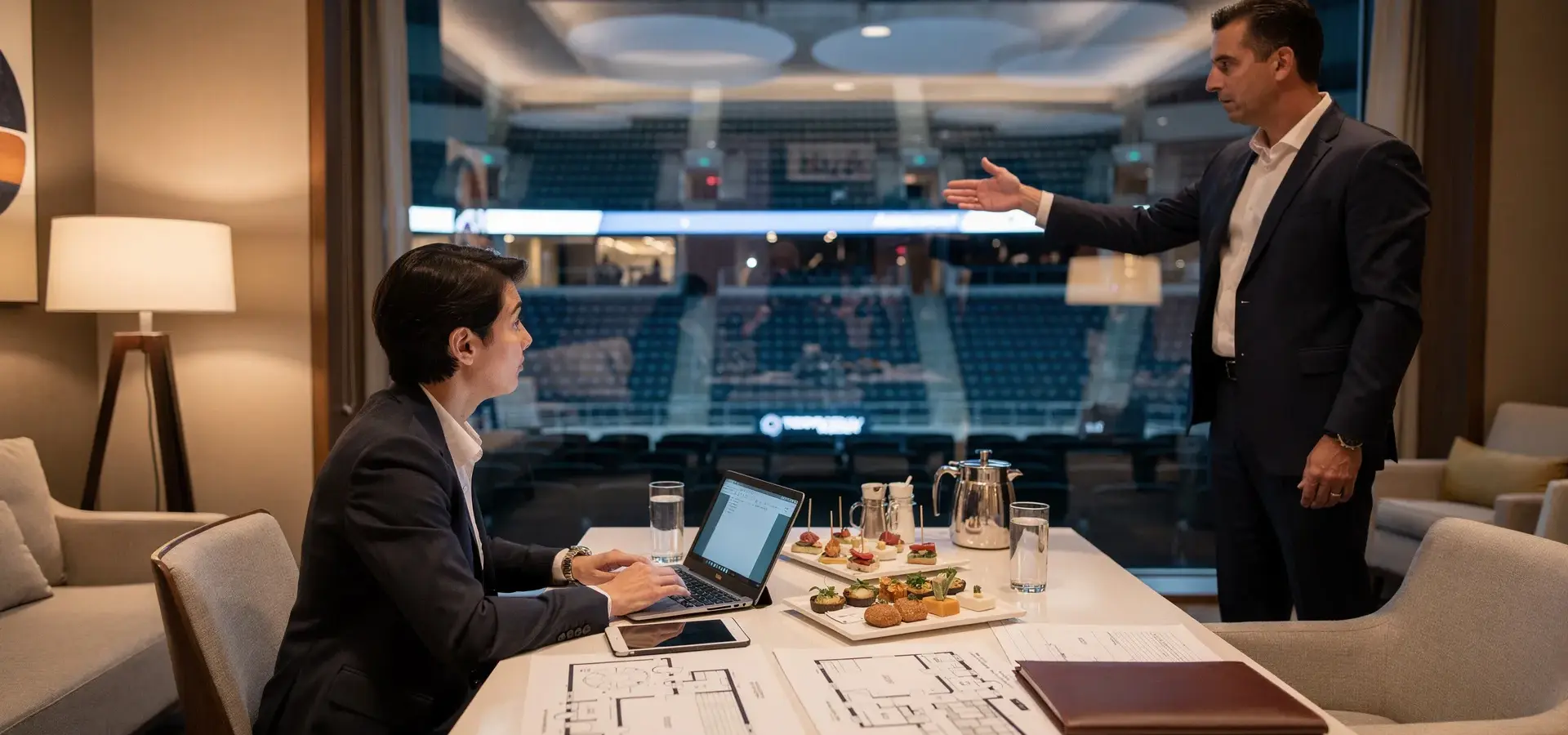
Hospitality suite meaning across event and hotel settings
For corporate planning, the label matters when guests need a setting for business hosting or networking, while the physical arrangement varies by setting. In an event setting, it can refer to a meeting or entertainment area away from the main event floor, where food, drink, or entertainment may be available.
In an arena, stadium, or concert venue, a venue hospitality suite may include a kitchenette, restroom, table, and seats, but features can differ by venue and arrangement.
Use the surrounding setting to interpret the label: an event or venue description tells you whether the term refers to a private gathering space, event seating, or a hotel-based room arrangement. LuxuryVIPSuites.com has been in business since 1992 and can be a quote source when you are evaluating a private suite for a specific event.
A hospitality suite can support casual meetings, networking, private gatherings, or business hosting. The phrase does not by itself establish the room size, number of admissions, food and beverage package, access route, or staffing arrangement. Treat the definition as a description of the format, then request the selected venue’s exact terms.
What guests may find inside the suite
A venue hospitality suite typically includes a kitchenette, restroom, table, and seats, but features can differ by venue and arrangement. You may also find comfortable seating, catered food options, technology, and a view of the event, depending on the format you select.
A hospitality box usually combines an enclosed space with a view of the action and comfortable seats directly in front of the box. Luxury suites are also described as private suites or lounges with comfortable seating, catering services, and personalized attention. These descriptions explain the intended guest experience; they do not turn every feature into a standard inclusion.
For a sports or concert booking, separate the experience into four parts before you compare options:
- Private space: where your group can gather, talk, and host guests.
- Event access: the seats, tickets, or other admission connected to the space.
- Hospitality: food, beverages, catering service, or a host when included.
- Practical access: the route into the venue and any areas connected to the package.
A category of VIP hospitality may also provide access to areas directly related to the sport, such as a Formula 1 pit lane or team garages. That type of access depends on the category, so ask for it specifically rather than assuming that a suite includes it.
If the suite is in a hotel or conference setting, the arrangement may include a lounge or seating area, a food and beverage setup, branded decor or signage, and dedicated staff or a host. Setup can involve reserving the space, arranging food and beverages, and coordinating staffing, catering, decor, and access logistics with the property. For any venue, write down the features your group needs and ask which are included, optional, or separately charged.
How an event hospitality suite differs from a hotel suite
An event hospitality suite is organized around hosting guests during an event, while a hotel suite is primarily an accommodation category.
Hotel terminology varies: a narrower usage treats a suite as a multi-room arrangement, while hotels also use the term for an accommodation with a separate living area and more space than a standard room.
The distinction matters when you are requesting a quote. Ask whether you are evaluating a venue-based suite with event admission, a hotel room or meeting space used for hospitality, or a package that combines accommodation and event activity. Those formats can use similar language while producing different access, staffing, food and beverage, and cost questions.
For a hotel-based gathering, proximity to the event venue, room size relative to expected guest volume, and the property’s ability to accommodate a custom setup all affect the fit. A space that is difficult to find or far from the main event may have low attendance regardless of its decor or staffing. For a stadium or arena booking, apply the same practical test to the suite entrance, seating location, and route your guests will use.
How related hospitality terms differ
Related labels describe different degrees of privacy and access rather than interchangeable names.
| Term | What the term describes | Access or seating model |
|---|---|---|
| Private suite | A fully private space for the group | Event access is connected to the suite; exact tickets and layout vary |
| Club seats | Upgraded individual seating with access to shared lounges and amenities | Each guest uses an individual ticket |
| Box seats | A semi-private format that is typically smaller than a suite | A smaller premium setup with a more limited group area |
| Loge boxes | Small-group seating with premium service | A compact premium format rather than a fully enclosed suite |
| Shared hospitality club or premium lounge | A shared hospitality setting | A common area rather than a private group room |
Capacity is a separate question from terminology. Most NFL suites hold 14 to 24 guests; some NFL venues offer loge boxes seating 4 to 12 depending on the setup, and some venues offer smaller premium options for groups of 2 to 8. These figures orient the format only; the selected venue and suite type can change the applicable arrangement.
For fit, identify the event type and hosting purpose, then decide whether the occasion calls for a private group space, individual seating with shared amenities, or a smaller premium format. Compare the group’s size with the event’s stated capacity and access terms rather than inferring them from the label.
Choose a private suite when your hosting purpose depends on keeping the group together in a dedicated space. Choose club seats or a shared lounge when individual seating and shared amenities meet the occasion. Choose a box or loge format when the group is smaller and semi-private or compact premium seating is enough. Then request the actual capacity, seating arrangement, and access terms for the event you are considering.

How to test whether the format fits your group and occasion
A suite fits your occasion when its space, access, viewing position, and hospitality setup support what you want to do with the group. Start with the purpose: client hosting, prospect meetings, employee recognition, family or friend gathering, networking, or simply watching the event together. Companies use sports hospitality to strengthen client relationships, reward employees, and create brand experiences, while a hospitality box can provide a private setting for customers, business partners, employees, friends, or family.
Use this screen before asking for options:
- Guest count: How many people are likely to attend, and how many admissions do you need?
- Event type: Are you comparing a sports game, concert, conference, or hotel-based gathering?
- Hosting purpose: Do you need a room for conversation, a place to serve food, or mainly a shared viewing experience?
- Privacy: Must your group have a dedicated area, or can it use shared lounges and individual seats?
- Viewing needs: Does the sightline matter more than room size, or do you need both?
- Access requirements: Do guests need a particular entrance, accessible route, or nearby facilities?
- Budget structure: Are you approving a whole-suite amount, a per-guest amount, or both?
When selecting a hospitality space, consider group size, viewing quality, accessibility requirements, and networking opportunities. Those criteria help you describe the experience before you compare a quote.
Capacity examples can help you decide whether to investigate a private suite or a smaller format. MLS luxury suites typically accommodate 16 to 24 guests, although capacity varies by stadium, suite type, and location. Most NFL suites hold 14 to 24 guests, while larger NFL party suites can fit 30 or more guests. Concert suite capacities vary by venue and suite type; most traditional luxury suites accommodate 12 to 30 guests, while larger hospitality spaces may accommodate 50 or more guests.
Those ranges are not a substitute for the selected venue’s capacity. If your expected attendance sits near the limit, ask whether the stated number refers to included tickets, total permitted occupancy, or a combination of seats and standing space. Request the venue-specific answer before you build the guest list or seek approval.
What to include in a hospitality-suite quote brief
A useful quote brief gives the supplier enough detail to answer the actual event question. Put these items in one place:
- Event: team, artist, conference, venue, city, and event date.
- Group: expected attendance, minimum attendance, guest mix, and any accessibility requirements.
- Experience: private room, enclosed suite, shared lounge, viewing priority, networking space, or a combination.
- Admission: number of tickets or passes required and where the seats are located.
- Hospitality: desired food and beverage format, service timing, and any catering requirements.
- Operations: preferred entrance, parking or arrival questions, host needs, branding, technology, and setup timing.
- Approval: maximum whole-event spend, target cost per guest, decision deadline, and the person with spending authority.
For a hotel or conference hospitality suite, include any requested decor, staffing, food and beverage setup, and custom room arrangement. Hotel hospitality-suite cost can be affected by the room rate, food-and-beverage minimum, setup and teardown fees, staffing, and branding or decor. Ask for each item as a separate line where possible.
Compare the complete quoted amount with the cost per guest using the same attendance assumption: divide the full event total by the number of confirmed or planned attendees. Keep the whole-suite total visible because a lower per-guest figure can result from a larger group, not from a lower event charge.
Request separate figures for the suite or room, included admission, catering, service charges, setup, staffing, decor, and any required minimum. For an NFL suite, ask how many tickets are included because that number depends on the specific team and venue details. If guests may be added, ask whether additional tickets are available and how they change the total.
Which suite terms to confirm before approval
Before you approve a hospitality suite, turn the quote into a written event checklist. Confirm:
- the exact venue, event, date, suite location, capacity, and viewing arrangement;
- the number of included admissions and the process for requesting additional tickets;
- the entrance, access route, parking information, accessibility arrangements, and any restricted areas;
- the food and beverage inclusions, catering deadline, minimum spend, service charges, and staffing;
- the setup, decor, technology, host, and teardown responsibilities;
- the payment schedule, cancellation or postponement terms, contract conditions, and approval deadline;
- the total charge, each separate fee, and the cost per guest based on your expected attendance.
Setting up a hotel hospitality suite involves reserving the space, arranging food, beverages, and decor, and coordinating staffing, catering, and access logistics. Use the same discipline for a venue suite: identify who supplies each part of the guest experience and when each choice must be finalized.
Plan early for premium events where hospitality spaces may sell out months in advance, particularly major championships and prestigious tournaments. Early planning gives you time to compare the private format with club seats, a box, or a shared lounge without making the decision under a deadline.
If capacity, access, food service, contract language, or spending authority remains unclear, take the question to the responsible venue, broker, procurement contact, or finance contact before approval. Do not assume that a feature mentioned in a general suite description is included in your event package; ask for the specific term in writing.

Move from a definition to an event-specific quote
A hospitality suite is the right format when you need more than admission: you need a defined place to host, gather, and manage the group experience. Before you request terms, have the venue, event date, expected party size, hosting purpose, access needs, required inclusions, and approval limit ready.
Price, inventory, and inclusions are confirmed per event, and a qualified professional should decide whether the arrangement suits your group’s needs and spending authority.
What should you confirm before requesting a hospitality-suite quote?
Does a hospitality suite automatically include food, drinks, parking, or a host?
No. Ask for each inclusion, optional service, minimum spend, and separate fee in writing.
Do hospitality-suite guests always receive event tickets or seats?
Event access may be connected to the suite, but the number of included admissions and seating arrangement vary by team, venue, suite type, and event. Confirm whether the quoted capacity means included tickets, permitted occupancy, or both, and ask how additional admissions are handled.
Is a hospitality suite suitable for a group smaller than a typical full suite?
It can be, but a full suite may provide more space than the group needs. Some venues offer smaller premium formats, such as loge boxes or other options for smaller groups, while shared clubs and lounges trade privacy for common amenities. Compare the group’s attendance and hosting needs with the available format before requesting terms.
How should a company compare a suite quote with individual premium tickets?
Keep the whole-suite total separate from the per-guest figure. Divide the complete quoted event cost by the planned attendance, then compare privacy, group interaction, included admissions, viewing position, catering, access, and any separate fees with what individual premium tickets provide.
Hosting a group?
Tell us the date and the headcount
We get back to you within one business day with what is available and what each suite costs.
Request a quote