
levi stadium suite
Levi’s Stadium Suites: A Corporate Planner’s Decision Guide Before You Request a Quote
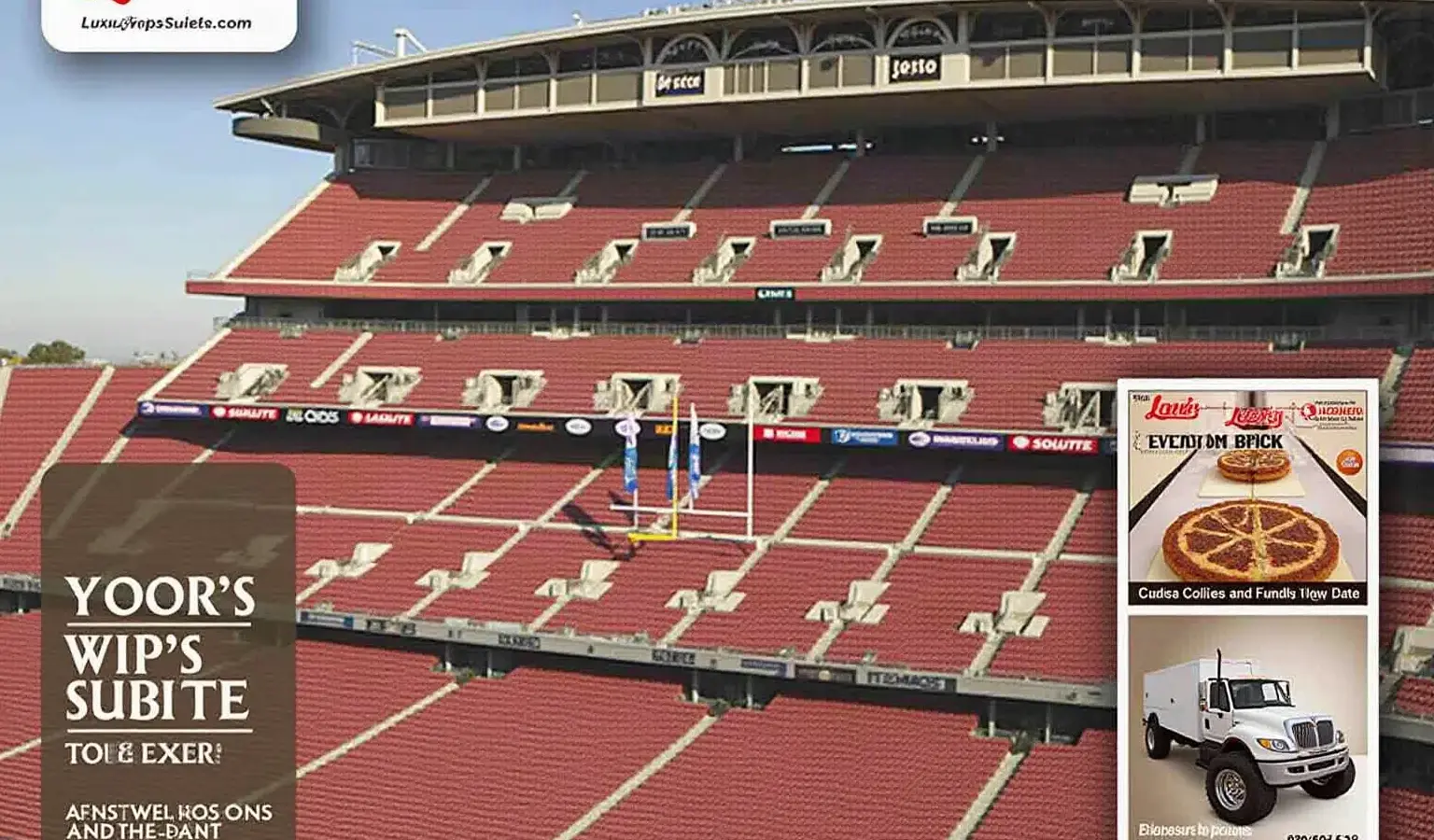
Start with the Levi’s Stadium event-terms matrix
A Levi’s Stadium suite fits a corporate event when the event purpose, guest plan, budget, and hospitality requirements align with terms confirmed for the specific date. The listing is only the starting point. Your decision should come from a short event brief and a written response that addresses the details most likely to affect cost, comfort, access, and guest experience.
A private suite can support client entertainment, internal recognition, relationship building, or a hosted outing for a company team. Those objectives create different requirements. A client event may place more weight on privacy, conversation, catering, and arrival logistics. An employee event may place more weight on group size, atmosphere, and straightforward cost allocation. A suite is a poor fit if the format looks attractive but cannot accommodate the actual attendance plan or the experience you need to deliver.
Use this sequence:
- Define the event, date, guest purpose, and attendance range.
- Separate the total budget from the acceptable cost per guest.
- Identify the suite details and hospitality items that must be included.
- Request a date-specific response rather than relying on general listing information.
- Treat the inquiry, quote, and confirmed booking as separate stages.
At Levi’s Stadium, compare the event type with the applicable published description: 49ers-game information lists game tickets, parking passes, and a catering package with beer and wine, while an event-suites description lists 16 tickets, four standing-room-only positions, and a 22-person maximum; ask the quote to identify which terms apply to your date. Mark each row as a planning reference, an item to verify, or a term confirmed in writing. This prevents a 49ers-game detail from being carried into a concert request and keeps a general range or configuration from becoming a booking assumption. Keep the planning decision conditional until the written terms satisfy the brief.
The central planning question is not whether a suite appears available in general. The question is whether the specific event, guest group, budget, and required hospitality details can be matched in writing. That distinction protects your internal approval process and gives you a clear basis for comparing the response with the event brief.
Define the event, date, and hosting objective
Your event purpose should determine what you ask a Levi’s Stadium suite to accomplish. Start with the occasion, then identify the guests and the interaction you want the setting to support. A suite for ten clients who need uninterrupted conversation has a different brief from a suite for a larger employee group attending primarily for the game or concert atmosphere.
Record these planning decisions before you compare suite details:
- Event: Identify the San Francisco 49ers game, concert, or other event under consideration.
- Date: Record the preferred date and any acceptable alternatives.
- Guest purpose: State whether the gathering is for client entertainment, prospect engagement, employee recognition, partner hosting, or another company objective.
- Attendance: Use an expected range rather than an optimistic maximum, and identify any guests who may join late or leave early.
- Hospitality objective: Decide whether privacy, food and beverage service, premium parking, conversation space, field or stage visibility, or a celebratory atmosphere matters most.
- Approval deadline: Note when your organization needs a firm decision, because the timing affects how much flexibility remains.
This brief keeps the suite from becoming the objective. The suite is the format; the event outcome is the decision standard.
Start with the exact event and requested date rather than a general event category. Keep any availability question tied to that request, then ask which configuration and terms apply. Identify the exact event before asking for pricing, because a football game, concert, and other event can carry different terms, demand conditions, and hospitality inclusions.
A clear hosting objective also improves the internal budget conversation. Instead of asking whether the suite is expensive, describe what the company is buying for the event: a private setting for client discussion, a managed hospitality environment, a group celebration, or a premium way to host an identified guest list. Then decide which requirements are mandatory and which are preferences. A response that meets every preference but misses a mandatory requirement is not a usable fit.
Use published Levi’s configurations as separate fit checks
Your attendance plan should distinguish total guests from available seats. One published Levi’s Stadium event-suites description lists 16 tickets and four standing-room-only positions, a maximum capacity of 22 guests, 12 theater-style seats, four barstools, and a private interior space. The same description is a published reference, not a promise that the listed configuration will apply unchanged to your event date.
Use the listed arrangement as a question set:
- How many ticketed positions are included for the event?
- How many guests can attend under the event-specific terms?
- Which positions are theater-style seats, barstools, or standing-room-only positions?
- Is the private interior space part of the arrangement being quoted?
- Does the layout support the way your guests will interact?
- Are any positions or access conditions different for the concert, game, or other event you selected?
Capacity should be treated as a fit test, not as a target to fill automatically. If your expected attendance is close to the stated maximum, build a second plan for late additions, staff, hosts, or guests who need a more suitable seating arrangement.
A Levi’s Stadium suite is described by LuxuryVIPSuites.com as a single private room rented for a group, with a stated range of 16–36 guests on its venue page. Ask for the configuration that applies to the exact event, including the number of included tickets, any standing-room positions, and the permitted maximum.
Guest suitability involves more than the headcount. Consider the composition of the group and the way the event will run:
- A client-heavy group may need enough seated positions for introductions and conversation.
- A larger employee group may accept a more active flow between seating and standing areas.
- Senior guests or guests with mobility requirements may need specific access and seating information.
- A hosted event may require a clear plan for employees, clients, vendors, and company representatives.
- A group with a strict arrival schedule may need parking and entry details before invitations are sent.
Write those requirements into the inquiry. Do not assume that a published capacity figure answers seating, access, or event-day operating questions.
Use event scope to frame the budget, not to set a quote
A published Levi’s Stadium suite page lists prices of $15,000–$50,000, depending on the event, availability, and suite type. Treat that range as general planning guidance rather than a price for your game, concert, date, or configuration. It does not establish that every event falls within the same range or that the listed amount includes every cost your company may incur.
Put the exact event and date at the top of the price row, then leave the total open until the event-specific response arrives. Published guidance also describes preseason games as more cost-effective opportunities and high-demand prime-time matchups as carrying a premium. Those descriptions help you anticipate different pricing pressure, but they do not establish a price for a particular game.
Build the budget in layers:
- Set the total amount your organization can approve for the hospitality package.
- Divide the approved amount by the expected attendance to create an internal cost-per-guest view.
- Keep a separate allowance for items that may not be included, such as catering upgrades, additional services, taxes, fees, or other event-specific charges.
- Identify a maximum total before you request the quote.
- Decide which requirements can be removed if the response exceeds the limit.
The cost-per-guest figure is a planning measure, not a claim about the seller’s pricing. Use the actual quoted total and included guest count for the final comparison.
A simple budget worksheet should contain the event and date, expected attendance, maximum total budget, internal cost-per-guest target, required inclusions, possible additional charges, approval owner, and decision deadline. That worksheet gives your team a common reference when the response arrives. It also prevents a low headline figure from appearing attractive when required hospitality items sit outside the quoted amount.
Build the Levi’s Stadium event-terms matrix
Use a Levi’s Stadium event-terms matrix rather than a single suite checklist. The matrix keeps each detail tied to the scope in which it was published or offered, which matters when game information, broader event-suite information, and a date-specific response do not describe the same package.
Create five rows before requesting a quote:
- Event scope: Record the specific 49ers game, concert, or other event, along with the requested date. Do not carry a general event assumption into the request.
- Price frame: Record the published $15,000–$50,000 range as general planning guidance, not as the price for the selected event. Leave the total open until the response identifies the event and date it covers.
- Configuration: Record the published seating, ticket, standing-room, capacity, and private-space descriptions as references to check. Do not combine different descriptions into one assumed layout; ask which configuration applies to the requested date.
- Inclusions: Keep private-suite tickets, parking, catering, and beverage information in separate entries. A game-related inclusion should not be carried into a concert or other event without confirmation.
- Quote status: Leave the final cells blank until the response identifies the offered configuration, guest count, total price, additional charges, and applicable conditions.
Apply three labels to every row: reference, verify, or confirmed in writing. A published detail remains a reference until the response addresses its scope. A question belongs in verify when the detail could change the event fit, cost, arrival plan, or guest experience. Confirmed in writing means the response has addressed the requested event and date; it does not mean that an unrelated description has been treated as equivalent.
This matrix creates a Levi’s Stadium-specific decision path. First identify the event scope, then isolate the published details that can help frame questions, then request terms in the same row order. Compare only details that cover the same event and configuration. If a material row remains unresolved, keep the planning decision open instead of filling the gap with a general listing assumption.
One published Levi’s Stadium suite page says reservations include tickets in a private suite and parking passes in premium lots. Published information for San Francisco 49ers game suites separately lists game tickets, parking passes, and a catering package that includes beer and wine. Because the descriptions address different scopes, do not assume that the catering package applies to every event or that every quoted arrangement has identical inclusions.
Ask for an itemized response that identifies each included element. If the response uses a broad term such as hospitality package, request the practical details behind that term before comparing it with your brief.
Do not treat a capacity figure as a seating guarantee, a parking reference as a complete arrival plan, or a catering description as a promise for a concert or other non-49ers event. The event date and written terms control your planning decision. Keep any unresolved item on the inquiry checklist rather than filling the gap with an assumption.
Compare game, concert, and other-event terms without blending them
Use the price row of the event-terms matrix to keep published guidance and the requested terms apart. One published description gives a general range of $15,000–$50,000 based on the event, availability, and suite type. Another describes variation by opponent, game date, suite size, and availability. These descriptions frame the questions; they do not provide a calculation for a particular event.
Complete the row with the exact event and date, the suite type or configuration offered, the guest count covered, the total-price basis, and any additional charges. Ask whether the amount reflects the availability for that date and whether it covers the private room or another basis. Keep taxes, fees, upgrades, catering, and other services as separate entries when the response does not include them.
Compare only responses that address the same event scope. A general range should remain marked as reference, while a date-specific total can be marked as confirmed in writing only when the response states the applicable conditions. This prevents the published range from being treated as a quote and makes the internal cost-per-guest calculation depend on the actual quoted total and included guest count.
Published inclusions also require scope control. A general event-suites description identifies private-suite tickets and premium-lot parking passes, while San Francisco 49ers game information lists tickets, parking passes, and a catering package with beer and wine. The second description may concern a game-specific package, so it should not be presented as a universal Levi’s Stadium suite inclusion.
For your comparison, mark every item as included, available at an additional cost, excluded, or still unresolved. That approach gives your approval team a clearer value comparison than a single headline price.
Value should be measured against the event objective and the usable guest experience. A lower total may not meet the brief if it omits a required service, provides too few suitable positions, or creates arrival problems for the group. A higher total may still fail if it exceeds the approval limit or includes features your guests will not use. Use the same criteria for every response and record the reason for your decision.
Verify the operational details that can change event fit
Operational details can determine whether a suite works for your event after the headline capacity and price appear acceptable. Put these questions in the event brief:
- What entry route and access process apply to the suite?
- Where do guests park, and how many parking passes are included?
- When can the group enter, and are there timing restrictions?
- Which seats, barstools, standing-room positions, and interior areas are available?
- What accessibility arrangements should be planned for specific guests?
- What food and beverage service is included, and what must be ordered separately?
- Are alcohol service, catering deadlines, or guest restrictions applicable?
- What venue policies affect bags, security, prohibited items, re-entry, or guest movement?
- What happens if the event schedule, venue operating rules, or suite configuration changes?
These are questions to resolve for the event, not assumptions to carry forward from a general listing.
Published information identifies private-suite tickets and premium-lot parking passes in one Levi’s Stadium description. San Francisco 49ers game information also lists a catering package with beer and wine and identifies Levy Restaurants as the catering partner. Those details should guide your questions, while the event-specific response should establish whether they apply to your date and what conditions accompany them.
The published event-suites description lists 12 theater-style seats, four barstools, four standing-room-only positions, and a private interior space within a 22-person maximum. Ask for the layout that applies to your event rather than planning invitations around those figures alone. Seating arrangement, access, and usable space affect how well the suite supports conversation, hosting, and guest movement.
A practical operational screen has three outcomes: acceptable as described, acceptable if a missing condition is resolved, or unsuitable for the brief. Use those labels in your planning notes. They are more useful than recording a general impression because they show exactly which unresolved detail could change the decision.
Turn the matrix into a complete Levi’s Stadium suite inquiry
Use the event-terms matrix as the structure for the inquiry. LuxuryVIPSuites.com states that each date is quoted individually and asks for the event, event date, and party size. Put those details in the event-scope row first, then add the planning information that allows the response to address suitability and approval row by row.
Prepare these fields:
- Event name, such as the specific 49ers game, concert, or other event.
- Preferred event date and acceptable alternatives, if any.
- Expected party size and a realistic attendance range.
- Company or host information.
- Purpose of the event and the type of guests being hosted.
- Maximum total budget and any internal cost-per-guest target.
- Required seating, privacy, access, parking, catering, or hospitality conditions.
- Accessibility or arrival requirements that affect the group.
- Decision deadline and the date by which your company needs written terms.
- Questions about configuration, inclusions, additional charges, and booking conditions.
A complete brief reduces avoidable follow-up and gives the response a usable planning context.
We recommend planning for about six weeks of lead time, while recognizing that timing can depend on the event and available inventory. Use that recommendation as a scheduling prompt, not as a guarantee that a request made six weeks in advance will produce a particular suite or price. For a high-demand event or a date with little flexibility, begin the internal brief earlier so approvals do not delay the inquiry.
A concise inquiry can follow this structure:
- Identify the event and preferred date.
- State the expected party size and event purpose.
- Give the budget range or approval ceiling.
- List mandatory inclusions and operational requirements.
- Ask for the available configuration, itemized inclusions, total price, additional charges, and conditions.
- State the date by which your team needs a decision.
The goal is not to make the request sound complete while leaving essential conditions unstated. The goal is to create a brief that another person can compare with the eventual response.
Ask for a response that fills each matrix row
Ask the response to follow the event-terms matrix row by row. Each answer should identify the scope it covers and the detail that can change fit, cost, or guest experience:
- Exact event and event date.
- Suite type, location description, or configuration being offered.
- Number of included tickets and any standing-room positions.
- Maximum permitted attendance and seating arrangement.
- Total price and whether the amount is for the private room or another basis.
- Parking passes, parking location, and any stated limitations.
- Catering and beverage inclusions, service limits, ordering deadlines, and additional costs.
- Entry, access, accessibility, security, and venue-policy requirements.
- Taxes, service charges, delivery charges, upgrades, or other additional amounts.
- Deadlines, payment requirements, cancellation terms, and the action required to accept the offer.
- The time period for which the quoted terms remain available, if stated.
A response that leaves a material item unresolved should remain a planning question, not become an implied benefit.
Compare the response with the event brief line by line. Published information can mention private-suite tickets, premium-lot parking passes, game tickets, or a catering package, but the response for your event should identify what actually applies. Mark each requirement as met, partly met, not met, or unresolved.
If the price is within budget but the guest arrangement is unclear, the decision is unresolved. If the arrangement fits but required catering is excluded, calculate the actual cost before approval. If the response meets the brief, retain the written terms with the internal approval record.
Focused follow-up questions are more useful than a general request for more information. Ask about the exact condition that affects the decision: the usable guest count, the parking allocation, the catering package, the access process, or the final total. Record the answer beside the corresponding line in your brief so the planning team can see which issues were resolved and which remain open.
Keep matrix status, quote, and booking status distinct
Use the event-terms matrix to distinguish three stages:
- Inquiry: You submit the event, date, party size, budget context, and requirements. The matrix records what you need answered; it does not establish availability or a price.
- Quote: You receive event-specific pricing and conditions. The response should fill the relevant rows for configuration, guest count, inclusions, additional charges, and operational terms, while leaving any unanswered material row marked unresolved.
- Confirmed booking: You complete the required acceptance process and receive written confirmation that establishes the arrangement under the applicable terms.
A quote request is not a confirmed booking or a firm price. Do not issue final guest communications, commit the full event budget, or describe the suite as secured until the required booking confirmation exists.
Availability and pricing depend on the specific event and date. Published information lists a general price range, states that each date is quoted individually, and describes suite availability as event-specific. Those details support a disciplined status process: preliminary planning can begin with general guidance, while a final commitment requires written terms for the requested event.
Keep the event brief, submitted inquiry, written response, follow-up answers, approval record, and final confirmation together. Assign a clear status to each item and note the date of the latest response. This record gives your company a practical handoff between event planning, finance, procurement, and the person managing guests.
Proceed only when the written response satisfies the brief
A Levi’s Stadium suite is ready for a corporate decision when the event purpose, guest plan, budget, hospitality requirements, and operational details align in writing. Use general pricing and configuration information to shape the questions, not to promise a result. Then compare the event-specific response with the brief line by line, resolve material gaps, and keep the booking status separate from the initial inquiry.
The practical decision test is simple: the event is identified, the attendance plan fits the applicable configuration, the total cost is understood, required inclusions are stated, operational conditions are acceptable, and the confirmation process is clear. If any of those conditions remains material and unresolved, keep the decision open. Individual suitability should be assessed with a qualified professional where appropriate.
Prepare the event name, date, party size, budget, hosting objective, required inclusions, and decision deadline before moving forward. A complete brief gives the response something concrete to answer and gives your company a defensible basis for approval.
What should a planner confirm before requesting a Levi’s Stadium suite quote?
What factors should I consider when evaluating a Levi's Stadium suite for a corporate event?
Consider the event purpose, guest plan, budget, and hospitality requirements. Ensure these align with the terms confirmed for the specific date.
How do I request a quote for a suite at Levi's Stadium?
Prepare an inquiry that includes the event name, preferred date, expected party size, budget, and any specific requirements for seating, privacy, and catering.
What is the typical price range for renting a suite at Levi's Stadium?
Prices for suites at Levi’s Stadium generally range from $15,000 to $50,000, depending on the event, availability, and suite type.
What should I verify about the suite before finalizing my booking?
Confirm the seating arrangement, access conditions, catering details, and any venue policies that may affect your event.
How far in advance should I plan to request a suite at Levi's Stadium?
It is recommended to plan for about six weeks of lead time before the event, although this may vary based on the specific event and availability.
Hosting a group?
Tell us the date and the headcount
We get back to you within one business day with what is available and what each suite costs.
Request a quote