
eagles suites
Philadelphia Eagles Suites: A Verification-First Guide to Fit, Pricing, and Quote Requests
Decide whether an Eagles suite fits your event
An Eagles suite fits your event when private space, group interaction, and a managed hospitality setting matter as much as watching the game. Luxury boxes, also called luxury suites, are private seating sections designed to provide premium event views. That format can support client hosting, an internal company outing, a partner event, or a larger group of friends and family, but the format is only a starting point.
Treat the inquiry as a game-specific fit decision rather than a standard purchase. Establish four points before you focus on a particular option:
- The game and date you want.
- The number and type of guests attending.
- The purpose of the gathering.
- The package details that matter to your group.
A suite may suit your plans if you need a shared setting where guests can talk, host clients, and experience the event together. It may be less suitable if your priority is the lowest possible per-person cost, a precise individual seat location, or a simple attendance plan with little need for private space.
The practical decision is not whether a suite sounds appealing in general. It is whether the space, date, package, and seller-set figure make sense for your particular group. Availability, inclusions, pricing, and terms must be established for the specific game and suite before you rely on them.
Define the game, group, and hosting objective
Your event date and game choice should anchor the inquiry. Begin with the exact Philadelphia Eagles game you are considering, then identify the venue, preferred date, and any acceptable alternatives. Sellers set suite prices.
Your hosting objective should be equally specific. Decide whether you are planning to:
- Host clients, prospects, partners, or senior guests.
- Give employees a shared event experience.
- Thank a team, recognize performance, or support a business relationship.
- Bring friends or family together for the game.
- Combine hospitality with conversation, food, or informal networking.
Then identify the people who need to be comfortable in the space. Consider seniority, mobility needs, dietary questions, arrival patterns, and whether guests will spend most of the event together or move between the suite and the seating bowl. You do not need every detail before requesting information, but you should know which details could change your choice.
A concise planning brief can state the game, target date, expected party size, purpose of the gathering, preferred budget range, and access or food-service questions. Add any deadline for internal approval or guest communication. This gives the conversation a defined starting point without assuming that a particular suite, amenity, or price is available.
Separate requirements from preferences. A fixed game date, an accessibility need, or a minimum ticket count may be a requirement. A preferred entrance, catering arrangement, or seating configuration may be negotiable. That distinction will help you assess alternatives without treating every preference as a condition of attendance.
Match suite scale to the guest group
Your party size should guide the suite scale. LuxuryVIPSuites.com’s Philadelphia Eagles guide recommends choosing size according to the number of people you plan to entertain: smaller groups may fit smaller suites, while larger groups require more space. The point is not to select the largest space offered. It is to give your group enough room to sit, move, talk, and use the package without paying for capacity your group will not use.
Use your expected attendance rather than your maximum invitation list. Separate confirmed guests from possible guests, and decide whether children, hosts, vendors, or last-minute additions belong in the working count. For a corporate event, include your internal hosts as well as invited guests. If the event includes a presentation, meal, gifts, or another activity, allow room for that purpose instead of treating every available position as a seat.
Before you compare options, write down:
- Expected guests and the maximum plausible count.
- Whether guests will remain together for most of the game.
- Whether the event needs room for conversation or informal networking.
- Whether any guest needs an accessibility-related accommodation.
- Whether you would accept a smaller space if it produced a more suitable quote.
- Whether the group needs assigned seats outside the suite area.
A smaller group does not automatically require the smallest available option. You may need room for hosts, food service, mobility equipment, or a business conversation. State those needs plainly so the proposed capacity can be assessed against how you intend to use the space.
One Lincoln Financial Field ordering page lists 20 suite tickets and four valet parking passes among the suite inclusions. That information belongs to the ordering information for that venue and should not be treated as a universal count for every resale suite or event. Ask for the ticket quantity and parking terms tied to the specific option you are considering.
If your guest count is uncertain, submit a range and explain the likely final number. That lets the conversation address fit without turning an estimate into a booking assumption. If the range is wide, ask for options that handle both ends and compare the resulting trade-offs directly.
Weigh private hospitality against the group’s priorities
Your group’s priorities should determine whether private hospitality earns its place in the event plan. A suite creates a private setting for the group, but the value of that setting depends on what you need the event to accomplish. Use these questions to make the decision concrete:
- Do guests need to speak with one another during the game?
- Will the event involve client hosting, introductions, or relationship-building?
- Does the group need a shared home base rather than separate seats?
- Are indoor space, movement, or food-service arrangements meaningful to the experience?
- Would guests use the private setting enough to justify the total quote?
- Is the event primarily about the game itself, or about the group experience around it?
A suite can support conversation and shared hosting, but that does not automatically make it the right format for every group. If guests want uninterrupted views and little interaction, prioritize the seating and sightline details supplied for the quoted option. If guests need to network, ask how the space is arranged and what access or food-service features are included rather than assuming that every option handles the event in the same way.
For a corporate event, define the business purpose before you compare packages. A client-hosting event may require a different arrival plan and guest mix from an employee appreciation outing. A partner meeting may need quiet conversation, while a family group may care more about comfort and ease of use. These are planning criteria, not promises about what any particular suite provides.
Consider the guest experience from arrival through departure. Ask whether your hosts will need time to welcome guests, whether the group will eat during the game, and whether anyone needs a specific access arrangement. A package that works for a short employee outing may not work for a client event with introductions and extended conversation.
Set a decision boundary before you request a quote. You might require enough capacity for the expected group, accept only an option with a defined parking arrangement, or decline a package whose catering terms cannot be explained. You can also state which features are preferences rather than requirements. That distinction prevents a desirable amenity from obscuring a basic mismatch in date, size, or budget.
Treat amenities as package-specific details
The exact amenities included with a Philadelphia Eagles luxury suite vary by suite type and event. Treat every amenity as a detail of the quoted package, not as a standard feature that transfers from one listing to another. That distinction matters for catering, parking, entrance arrangements, lounge access, seating configuration, climate control, restrooms, and any service provided before or during the game.
SuiteHop describes Eagles suites as climate-controlled areas with private entry into Lincoln Financial Field and a private concourse, while also stating that the features should be checked for the suite being quoted. Suite Experience Group says in-suite catering is optional, available for purchase, and has no catering minimum; it also identifies the Eagles Presidents Club suites as Lincoln Financial Field’s only all-inclusive suite option. Those descriptions should not be merged into one universal package. Ask which statement applies to the exact suite and game you are evaluating.
Lincoln Financial Field’s ordering-suite information lists private entrances and concourses, lounge seating, a private restroom, television access, suite tickets, and parking passes among its information for suite ordering. It also lists access beginning at least two hours before the game and continuing up to one hour after the game ends. These are venue-published details, but the page is not a substitute for the package terms attached to a specific quote.
Request a written inclusions list that answers these questions:
- How many tickets are included, and are they all for the same suite?
- What parking passes, if any, come with the option?
- Is catering included, optional, separately purchased, or unavailable?
- What food and beverage minimums or ordering deadlines apply?
- Which entrance, concourse, lounge, restroom, and accessibility details apply?
- When can your group enter, and when must it leave?
- Are there restrictions on outside food, decorations, gifts, or event materials?
Use the answers to compare packages on equal terms. Do not add a feature to your event budget until the quoted option identifies it.
Use the matchup and timing to plan ahead
Your preferred game can affect how much choice you have. Our Philadelphia Eagles guide says that division games, nighttime games, and holiday games may sell out sooner, so planning ahead can preserve more suite options. This is a planning recommendation, not a statement that any particular game has inventory or that a quote will remain available.
Start with the event date if the game itself is non-negotiable. If the group is flexible, prepare two or three acceptable dates or matchup types. That gives you a way to compare the hospitality plan without treating a single unavailable option as the end of the project.
Build a short timing plan:
- Identify the preferred game and any acceptable alternatives.
- Estimate when invitations, travel arrangements, and internal approvals must be complete.
- Submit the requirements early enough to compare suite size, inclusions, and the seller-set figure.
- Leave time to resolve catering, parking, access, and cancellation questions.
- Keep the event date, guest count, and approved budget aligned as the quote changes.
A date may be attractive because of the opponent, kickoff timing, holiday schedule, or guest availability. Record those preferences in the inquiry so the options can be evaluated against the actual purpose of the event. If the date cannot move, say so. If the group can move, state the acceptable range instead of asking for an unspecified suite.
Allow time for the steps that follow a quote. Your organization may need budget approval, guest-list confirmation, purchase authorization, travel coordination, and communication of arrival instructions. A flexible date can help with comparison, but it does not remove the need to resolve package details. A fixed date may require faster decisions, but it still does not justify treating an unconfirmed option as reserved.
Do not let urgency replace diligence. Planning ahead can give you more options, but it does not establish present availability, reserve inventory, or lock in a price. The specific game and suite still control the decision.
Prepare the information a quote request needs
Your inquiry should give enough information to identify the event and size the request. LuxuryVIPSuites.com provides links to request a quote or browse suites. Treat the submission as a structured way to communicate requirements and begin a game-specific conversation.
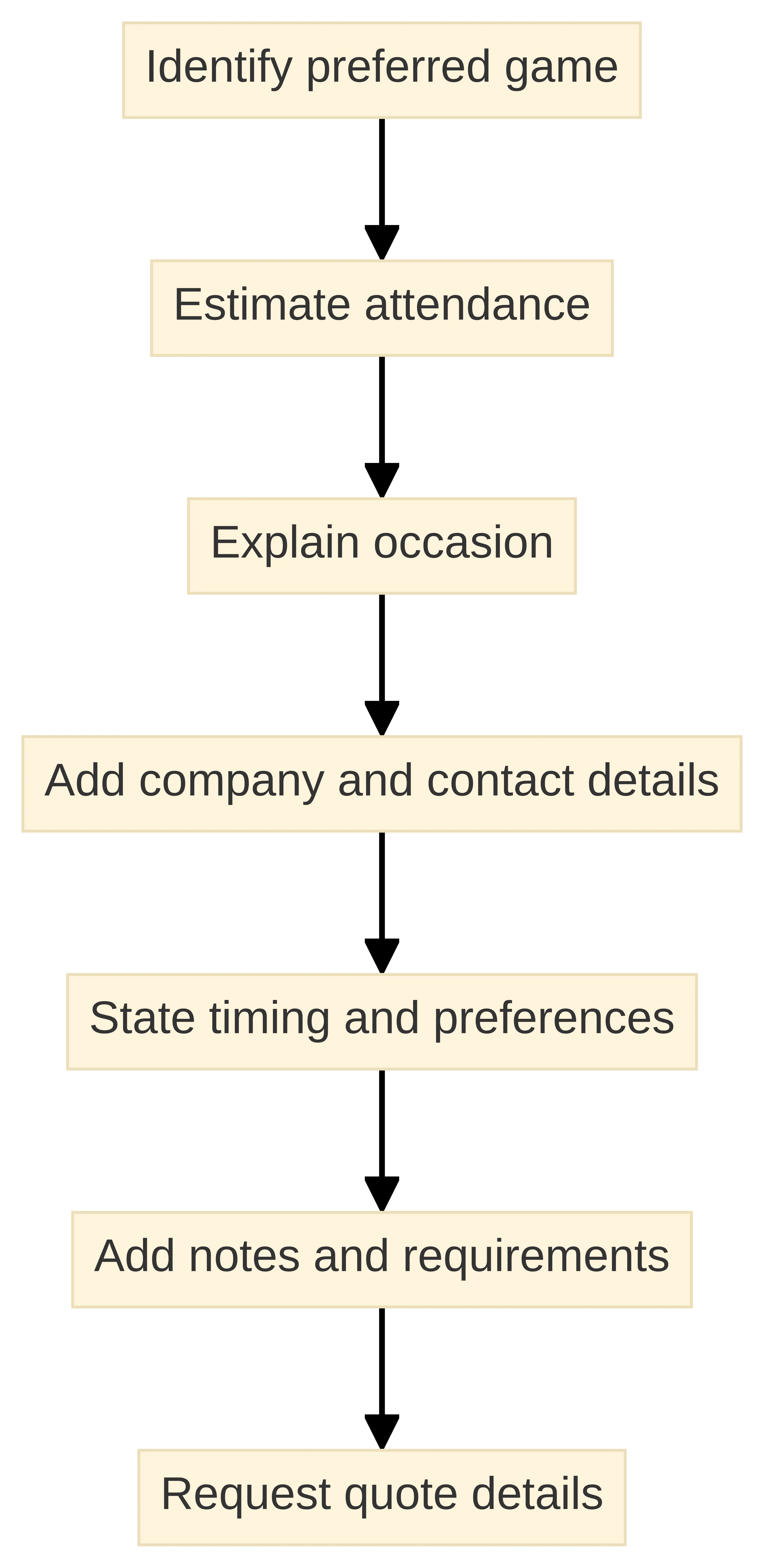
Include these details in the request:
- Venue: Lincoln Financial Field in Philadelphia, Pennsylvania.
- Event: the Philadelphia Eagles game you want, with the date if known.
- Party size: expected attendance and, if useful, a maximum range.
- Occasion: client entertainment, employee event, partner gathering, family outing, or another purpose.
- Company details: your organization and your role in the planning process.
- Contact details: your name, email address, and phone number.
- Timing: preferred response window or any internal approval deadline.
- Preferences: acceptable dates, suite scale, parking needs, catering questions, access requirements, or seating priorities.
- Notes: guest considerations, budget parameters, and any feature that is a requirement rather than a preference.
Use plain language for the constraints that matter most. State that you need a particular group size, that the event date is fixed, or that you can accept alternate dates if the preferred game does not fit the available options. If you are still estimating attendance, provide the expected number and explain the range instead of presenting an uncertain count as final.
Ask for the response in a form you can evaluate: the quoted suite or package, ticket count, parking details, catering treatment, access information, total price, applicable fees, payment timing, and the terms governing changes or cancellation. You are not asking for a generic description. You are creating a comparison point for one event, one group, and one proposed option.
A useful note can be brief: identify the preferred game, provide the expected and maximum attendance, explain the corporate or personal purpose, list any fixed requirements, and name acceptable alternatives. Add questions about parking, catering, accessibility, ticket quantity, and the timing for payment or delivery. Clear constraints make it easier to distinguish a suitable alternative from a package that only matches the event name.
Evaluate pricing as a seller-set, game-specific figure
Sellers set suite prices, and prices may be above face value. That means you should evaluate the figure attached to the quoted suite and event rather than rely on a general expectation about what an Eagles suite costs. A price discussion without the game, date, suite details, ticket quantity, and included services does not give you a reliable comparison.
Organize the pricing conversation around the variables that matter to your decision:
- The exact game and event date.
- The proposed suite size and included ticket quantity.
- The group’s expected attendance and how much capacity you will use.
- Parking, catering, food and beverage arrangements, and any service charges.
- Access timing and any event-specific requirements.
- Payment schedule, taxes, fees, and the terms that apply if the event changes.
These questions help you understand what the figure covers. They do not establish that any one variable will raise or lower the price in a predictable way. Ask for the total amount and a clear description of included and excluded costs before comparing it with another option.
For corporate planning, separate the total event budget from the suite figure. Include transportation, guest communications, food and beverage, gifts, staffing, and contingency items where they apply. Then decide whether the private setting serves the event objective well enough to justify the total. A lower quoted figure may still be a poor fit if it excludes a requirement your group needs; a higher figure may be difficult to support if the group will not use the space or included capacity.
For an internal comparison, view the quote in two ways: as the total amount requiring approval and as an estimated amount per expected attendee. If attendance is a range, test the likely count and the lower plausible count rather than presenting one uncertain denominator as final. Then note which elements are fixed in the quote and which may require separate purchases, such as catering or parking. This does not turn the per-person figure into a promise about value; it simply shows whether unused capacity or excluded services could change the planning decision. Keep the total figure as the approval reference, and use the per-person view to compare options with similar inclusions.
Record the price with the details supplied in the quote. Note the game, date, ticket count, package inclusions, fees, payment schedule, and any expiration or change condition supplied with the quote. If you compare two figures, compare the same categories rather than looking only at the headline amount.
Separate venue, license, and marketplace information
Different sources answer different questions about your event. We are a resale marketplace provider and are not affiliated with any team or venue. Our marketplace information can support the inquiry path and seller-set pricing context, but a third-party description does not confirm what the venue will provide.
Venue information describes the stadium’s ordering information, listed features, and access details. Lincoln Financial Field’s ordering-suite information lists particular ticket, parking, access, and facility details, while its suite terms govern the licensed use of the suite. Those materials are useful for identifying questions, but the quoted option and applicable terms determine what your group can rely on.
Third-party suite descriptions can help you understand the kinds of features that may appear in an Eagles listing. SuiteHop describes private entry, a private concourse, and climate-controlled areas; Suite Experience Group describes optional in-suite catering and identifies a specific suite category whose current terms should be verified.
When information appears inconsistent, label the source and its role instead of averaging the statements together. Use the venue for venue-controlled information, the applicable license terms for contractual conditions, and the marketplace response for the option and seller-set figure being offered. Then ask which document governs the point that matters to your decision.
This separation is especially useful for parking, catering, access, ticket quantity, cancellation, and event changes. It keeps a general description from carrying more weight than the document that controls the specific arrangement.
Keep a simple record with four headings: event requirements, quoted package, venue information, and governing terms. Put each answer under the heading that matches its source. That format helps you see whether a point is confirmed for your event or remains a question for the proposed arrangement.
Verify the terms that can change the decision
Lincoln Financial Field’s suite license terms make use of the suite subject to the agreement and full, timely payment of the fees in the order summary. For your planning file, identify the agreement, order summary, payment deadline, and party responsible for payment. A quote conversation and a completed license are different stages, so do not treat an informal figure or package description as the full set of governing terms.
For a cancelled event, Lincoln Financial Field’s terms describe either an opportunity to select a substitute event based on suite availability or a refund of the applicable license-fee portion, subject to exceptions and the licensor’s election. That provision is specific to the venue terms and does not establish a universal cancellation policy for every resale arrangement. Ask which cancellation, postponement, rescheduling, and substitution rules apply to the option in your quote.
Before you approve the event, obtain clear answers to these questions:
- What document governs the suite use and payment obligation?
- When is payment due, and what fees are included in the total?
- What happens if the game is cancelled, postponed, or rescheduled?
- What happens if the quoted suite becomes unavailable?
- Which remedy applies to the event, and who decides whether an alternative is offered?
- What ticket delivery and access instructions will your host receive?
- Which package features are confirmed in writing?
- Are there restrictions affecting food, decorations, gifts, or business materials?
Keep the answers with the quote and the event brief. If a term would affect your company’s financial, legal, or contractual decision, route that question through the appropriate internal approval process.
Use the terms as a decision gate. Proceed only when the event, package, price, payment requirement, access instructions, and change provisions are clear enough for your organization’s approval process. If one of those points remains unresolved, mark it as open rather than filling the gap with a general description of a different suite or event.
To make that gate usable, mark each point as confirmed, conditional, or unanswered. A point is confirmed only when the response or governing material ties it to the quoted game and suite; a general venue description belongs in the conditional or unanswered column. List the follow-up question beside each open point, along with the person responsible for obtaining an answer and the date by which the event decision must be made. This creates an auditable handoff for a corporate planning team without treating a pending answer as a promise. If the answer changes capacity, included services, total figure, payment requirement, or cancellation treatment, revisit the fit assessment rather than approving the original comparison unchanged.
Understand what a LuxuryVIPSuites.com inquiry means
A LuxuryVIPSuites.com inquiry communicates your requirements for a specific event and asks for a private-suite quote. We are a resale marketplace provider, and we are not affiliated with any team or venue. We invite clients to request a quote or browse suites, but the inquiry itself is not a confirmed booking, an inventory promise, or a firm price.
Use the inquiry to move from a broad interest in attending the game to a defined set of requirements. State the venue, event date, party size, occasion, contact details, and planning notes. If your date or attendance is flexible, say how much flexibility you have. If a feature is essential, identify it as a requirement and ask for it to appear in the response. If it is simply preferred, label it as a preference so you can assess alternatives without creating a false availability assumption.
When the response arrives, compare it with your original brief. Check that the event, suite, ticket count, party size, parking, catering, access, total figure, payment timing, and applicable terms are all addressed. Record any unanswered point and ask a focused follow-up question. You can then decide whether the proposed option fits, whether an alternate option is worth considering, or whether the event should use a different format.
The inquiry is useful because it creates a clear handoff from planning requirements to a specific option. It does not remove the need for event-specific confirmation.
A response fits your planning need only when it can be matched to the brief. Compare the proposed date with the date you requested, the ticket count with your attendance range, and the package details with your stated requirements. If the response changes one of those points, record the change and decide whether it is acceptable before moving forward.
Submit the inquiry once the requirements are clear
Your next step is ready when you can describe the game, group, purpose, and non-negotiable requirements in one concise brief. Include the expected party size, acceptable date range, desired hospitality features, pricing questions, and any term that could change approval. Then evaluate the response against the same criteria instead of judging the suite from a headline description alone.
A qualified professional should decide any individualized financial, legal, or contractual question for your circumstances. For the event decision itself, keep the boundary simple: a quote must identify the specific game and suite, and availability, price, inclusions, and terms must be established before you rely on them. This approach gives you a practical basis for deciding whether private hospitality fits your group and your purpose.
Once those requirements are assembled, you can move from general interest in an Eagles game to a focused submission that is easier to evaluate and approve. Keep the event brief, response, inclusions, pricing, and governing terms together so your final decision reflects the arrangement actually offered.
What should you confirm before relying on an Eagles suite quote?
What information should I provide when requesting a quote for an Eagles suite?
When requesting a quote for an Eagles suite, include details such as the venue (Lincoln Financial Field), event date, expected party size, occasion (e.g., corporate event or family outing), and any specific requirements or preferences.
What amenities are typically included with Philadelphia Eagles luxury suites?
Amenities for Philadelphia Eagles luxury suites can vary by suite type and event, but they often include private seating, access to indoor lounges, premium viewing areas, dedicated entrances, and food and beverage options.
How early should I plan to book an Eagles suite?
It’s advisable to plan ahead when booking an Eagles suite, especially for popular games such as division, nighttime, or holiday games, as these can sell out quickly.
What should I verify about the suite before finalizing my booking?
Before finalizing your booking, verify details such as the suite’s capacity, included amenities, access times, parking arrangements, and cancellation policies to ensure they meet your event needs.
Can I customize catering options for my Eagles suite?
Yes, in-suite catering is typically available for purchase for Eagles suites, and you can often choose from a menu to suit your group’s preferences.
Hosting a group?
Tell us the date and the headcount
We get back to you within one business day with what is available and what each suite costs.
Request a quote