
eagles suites
Eagles Suites for Corporate Events: A Decision Guide Before You Request a Quote
Decide whether private hospitality fits the event objective
Private-suite hospitality fits a corporate event when the hosting objective, guest group, and operating requirements justify a separate premium setting. Luxury suites are private seating sections in venues, and Lincoln Financial Field describes its suites as an environment designed for privacy and luxury. A Philadelphia Eagles suite may support client entertainment or employee recognition, but those uses do not establish that every suite will suit every event.
Start with the business purpose rather than the seating label. Ask what you need the event to accomplish:
- Client hosting: Do you need a setting where invited clients can spend time with your team during a game?
- Employee recognition: Is the event intended to recognize a defined group rather than accommodate an open-ended guest list?
- Relationship building: Will the guest experience depend on conversation, hospitality, and time together away from ordinary office routines?
- Brand or company experience: Does a private setting support the way you want guests to interact with your organization?
A suite is less suitable when your only requirement is a large number of tickets at the lowest possible per-person figure, or when your guest list is too uncertain to estimate attendance. A private setting can carry unused capacity and additional decisions about food, access, parking, and guest support.
Use a simple initial test. Proceed with research if you can state the event purpose in one sentence, identify the people you expect to attend, and describe the guest experience you want to create. If you cannot yet answer those questions, define the event brief first instead of comparing individual suites.
Define the guest experience before comparing suites
The guest experience should determine which suite questions you ask, not the other way around. A private setting may support conversation, hospitality, and shared viewing, but the value depends on how those elements fit your guests and your event purpose.
A corporate hospitality guide says Fortune 100 executives report client hosting as the primary value of premium seating, while many organizations struggle to link suite activity to revenue. That observation is a planning prompt, not a result you can assume for your event. Set a practical objective before you assign financial value to the experience.
Write the guest brief around five choices:
- Who is attending? Separate clients, prospects, employees, partners, executives, and accompanying guests if their needs differ.
- What should happen during the event? Decide whether conversation, networking, recognition, shared entertainment, or a combination matters most.
- How much privacy is needed? A group that needs structured discussion may value a different arrangement from a group focused on watching the game.
- What arrival and access experience is appropriate? Identify whether guests need simple entry instructions, parking support, accessible routes, or an earlier arrival window.
- What would make the event feel incomplete? List requirements such as a particular seating orientation, food service, guest assistance, or a way to manage changing attendance.
Separate requirements from preferences. Accessibility support, a workable arrival route, and a budget limit may be conditions of attendance. A particular view, menu, or lounge feature may be a preference that must be checked against the selected suite and event.
The result should be a short experience brief that you can use when comparing options.
Match suite size to the real attendance plan
Suite size should match the number of guests you realistically expect to attend, not the largest number you could invite. LuxuryVIPSuites.com’s Eagles suite guidance says the right size depends on the number of guests, with smaller groups generally fitting smaller suites and larger groups requiring more space. The same guidance says choosing the correct size can help avoid overcrowding and paying for unused tickets.
Build the attendance plan in three numbers:
- Invited guests: Everyone who receives an invitation.
- Expected attendees: The working number you use for per-person planning.
- Possible additions: Guests who may be added if the event purpose or client schedule changes.
Use expected attendees for the first value calculation, then test the result against the possible additions. If the suite only works financially when every place is filled, the plan may be exposed to ordinary changes in attendance. If the suite is much larger than the expected group, the added space may not justify its effect on the total and per-person figures.
Party size also affects how you use the room. A compact group may need a setting that keeps people near the main conversation area. A larger group may need enough room for movement, separate conversations, and guests who spend different portions of the game inside and outside the seating area. Do not treat a published ticket count as the same thing as comfortable attendance for your particular program.
Before asking for options, write down the expected headcount, the minimum attendance that still makes the event worthwhile, and the maximum group you might host. Ask for the suite’s applicable ticket allocation and any limits that affect those figures. Select the size only after the event-specific details are clear; do not choose a larger suite simply because a higher capacity sounds more flexible.
Use listed features as questions, not promises
Lincoln Financial Field’s ordering page lists suite inclusions and features that can shape your planning questions, but the listed details require confirmation for the specific suite and event. The page lists 20 suite tickets and four valet parking passes among the inclusions. It also lists access beginning at least two hours before the game and continuing up to one hour after the game concludes, along with private entrances and concourses.
The same page lists climate control, lounge seating, theater-style seating facing the field, retractable windows, a private restroom, and access to two exclusive 40,000-square-foot climate-controlled club lounges. Treat each item as a question for the event-specific option rather than as a promise about every available suite.
Convert the list into a verification sheet:
- Admission: How many tickets apply to the selected suite, and are there any separate ticket or credential instructions?
- Arrival: What entry route applies, when may guests enter, and do the listed access times apply to this game?
- Parking: Are the listed valet passes included for this suite and event, and how should they be distributed?
- Seating and room layout: Does the selected space have the listed field-facing seating, lounge arrangement, windows, and private restroom?
- Climate and shared areas: Does the option include the listed climate-controlled features and club-lounge access?
- Guest materials and service: Which event-day services, if any, apply to the selected arrangement?
Do not promise a particular view, food menu, room configuration, or amenity to your guests until the applicable details are confirmed. The difference matters when you are preparing invitations or comparing the per-person value of two options.
Keep the venue’s listed description separate from your own event requirements. A feature may be present yet still fail to answer a specific need, such as accessible arrival, a catering deadline, or enough space for your expected group. Ask for the exact inclusions, access terms, and restrictions attached to the option being considered.
Build the budget around the quote and per-guest value
A per-guest budget turns a suite opportunity into a decision you can compare with other corporate hospitality formats. Do not estimate a price before an event-specific response. Instead, establish the calculation you will use when the amount, inclusions, and terms are available.
Use this planning measure:
Per-guest figure = total applicable event cost ÷ expected attendees
Use expected attendees rather than the maximum ticket allocation. For example, if twelve guests are expected but the option lists more tickets, divide the applicable total by twelve for internal planning. Run a second calculation using a lower attendance scenario so you can see how ordinary changes affect the result.
Ask the quote to identify whether each item is included, excluded, or subject to a separate arrangement:
- suite or license amount;
- event tickets or admission credentials;
- parking or transportation;
- food and beverage service;
- taxes, service charges, processing charges, or other stated fees;
- delivery, staffing, or event-day coordination items; and
- changes, cancellation, or rescheduling terms that affect financial exposure.
The list is a budgeting framework, not a statement that every item will appear on every quote. Keep uncertain amounts in a separate column rather than combining them with confirmed figures. That makes it easier to distinguish the quoted total from your internal allowance for optional hospitality or transportation.
Use three budget views when reviewing the response:
- Committed amount: The amount the quote identifies for the offered arrangement.
- Expected per-guest amount: The committed amount divided by your expected attendance.
- Downside scenario: The same applicable amount divided by the smallest attendance that still makes the event worthwhile.
These views answer different approval questions. The committed amount supports authorization, the expected figure helps compare formats, and the downside scenario shows how attendance changes could affect internal value. Keep optional items separate until their inclusion and cost are stated.
Per-guest value should reflect the purpose established in your experience brief. If the goal is client conversation, evaluate the access, privacy, and usable time that support that purpose. If the goal is employee recognition, consider whether the format works for the group and whether attendance is likely to be consistent. Avoid describing the event as cost-effective until the actual attendance plan and inclusions support that conclusion.
The suite-size guidance also matters here: selecting the correct size can help avoid paying for unused tickets. Compare the expected attendance, the total applicable amount, and the guest experience together. A lower headline amount is not automatically the right decision if it does not meet the event’s operating requirements.
Screen the game date for availability pressure
Game-date demand can affect the options you can evaluate, so screen the date before you finalize the event format. LuxuryVIPSuites.com’s Eagles suite guidance identifies division games, nighttime games, and holiday games as among the games that may sell out first and advises planning ahead. That guidance does not confirm availability for any particular game.
Review the date through four lenses:
- Event appeal: Identify whether the opponent, rivalry, holiday timing, or kickoff time is central to the guest experience.
- Guest schedules: Check whether clients, employees, or executives can attend the selected date and arrival window.
- Date flexibility: Decide whether an alternate game would still meet the event objective before you begin comparing options.
- Planning lead time: Start the availability conversation before invitations, catering commitments, or transportation arrangements depend on a particular suite.
Do not use a general pattern to predict that a suite will be available or unavailable. Availability can depend on the event, the suite, the date of the request, and the inventory offered at that time. Ask for an event-specific response and record the date on which the availability information applies.
If the date is fixed, state that clearly and prepare a fallback plan for the guest experience rather than promising a suite before the details are confirmed. If the date is flexible, give the acceptable range, the preferred event, and any dates that cannot work. That gives the comparison a usable boundary without assuming that an alternative has the same inventory, access, or price.
Resolve operational, accessibility, and catering requirements
Operational, accessibility, and catering requirements should be resolved before you treat a suite as suitable for the event. These details can change the practical value of an option even when the room, date, and headline amount appear to fit.
For accessibility, Lincoln Financial Field advises patrons bringing a service animal to contact the ticket office as soon as possible. The venue also says relocation to the closest accessible seating area may occur when seating or egress constraints require it. Contact the venue about the specific event and explain the support your guests need; do not assume that a general suite description answers an individual access question.
For food and beverage, request the applicable menu, ordering process, service deadlines, minimums, fees, and billing method. Ask whether outside food, dietary requests, or special service arrangements are subject to venue rules. Do not describe catering as included, available, or suitable for a particular guest until those terms are confirmed for the option under review.
For arrival and event-day coordination, clarify:
- which entrance guests should use;
- when the suite can be accessed;
- how tickets, credentials, and parking information will be delivered;
- who handles last-minute guest changes;
- where guests can obtain assistance; and
- which responsibilities remain with your team on event day.
Cancellation and rescheduling terms also need attention. Under the selected Lincoln Financial Field suite license terms, if an event is cancelled, the licensor may offer a substitute event within one year based on suite availability or refund the applicable portion of the license fee. The same terms state that providing a reasonably comparable suite for a cancelled event can limit the licensor’s obligation under that provision. Those terms should be reviewed against the agreement that applies to your event; they are not a universal description of every arrangement.
Record operational answers beside the budget and guest-experience criteria. A requirement is unresolved when you have only a general venue description, a verbal assumption, or a feature copied from a different suite or event.
Ask for an event-specific quote with a complete brief
An event-specific quote brief should give enough information to match the opportunity to your actual event rather than to a generic suite description. Complete the brief before you send it so the response can address suitability, availability, and value together.
Include these details:
- Event: State that you are evaluating a Philadelphia Eagles game, identify the preferred date or acceptable date range, and note whether the date is fixed.
- Venue: Identify Lincoln Financial Field and any venue-specific arrival or access question that needs an answer.
- Party size: Give the expected attendance, the minimum viable group, and the largest group you may host.
- Hosting purpose: Explain whether the event is for clients, prospects, employees, partners, executives, or another defined group.
- Guest experience: Describe the balance you need between conversation, game viewing, privacy, hospitality, and time before or after the game.
- Budget boundary: State whether your limit is a total amount, a per-guest figure, or both. Say which items must be included in that limit.
- Operational needs: List parking, arrival, ticket distribution, catering, dietary, accessibility, service-animal, or guest-change questions that affect the decision.
- Flexibility: Identify acceptable alternatives, such as a different date or group size, without implying that an alternative is available.
A concise inquiry can follow this order: preferred game and date, expected attendance, hosting purpose, budget measure, required guest conditions, acceptable alternatives, and the specific items you want included in the response. Put questions that could disqualify an option, such as accessibility or a fixed date, before optional preferences such as a particular lounge or seating feature.
Ask for the response to distinguish confirmed event-specific details from items that still require venue confirmation. Request the applicable ticket allocation, access window, parking arrangements, room features, catering terms, fees, and change or cancellation conditions for the option being offered.
A complete brief also protects the guest experience. You can compare the response against the purpose, headcount, budget calculation, and requirements you set earlier instead of making a decision from a room name or a general amenities list. Keep the brief and the response together so later invitations and internal approvals use the same information.
Separate inquiry, quote, and confirmed booking
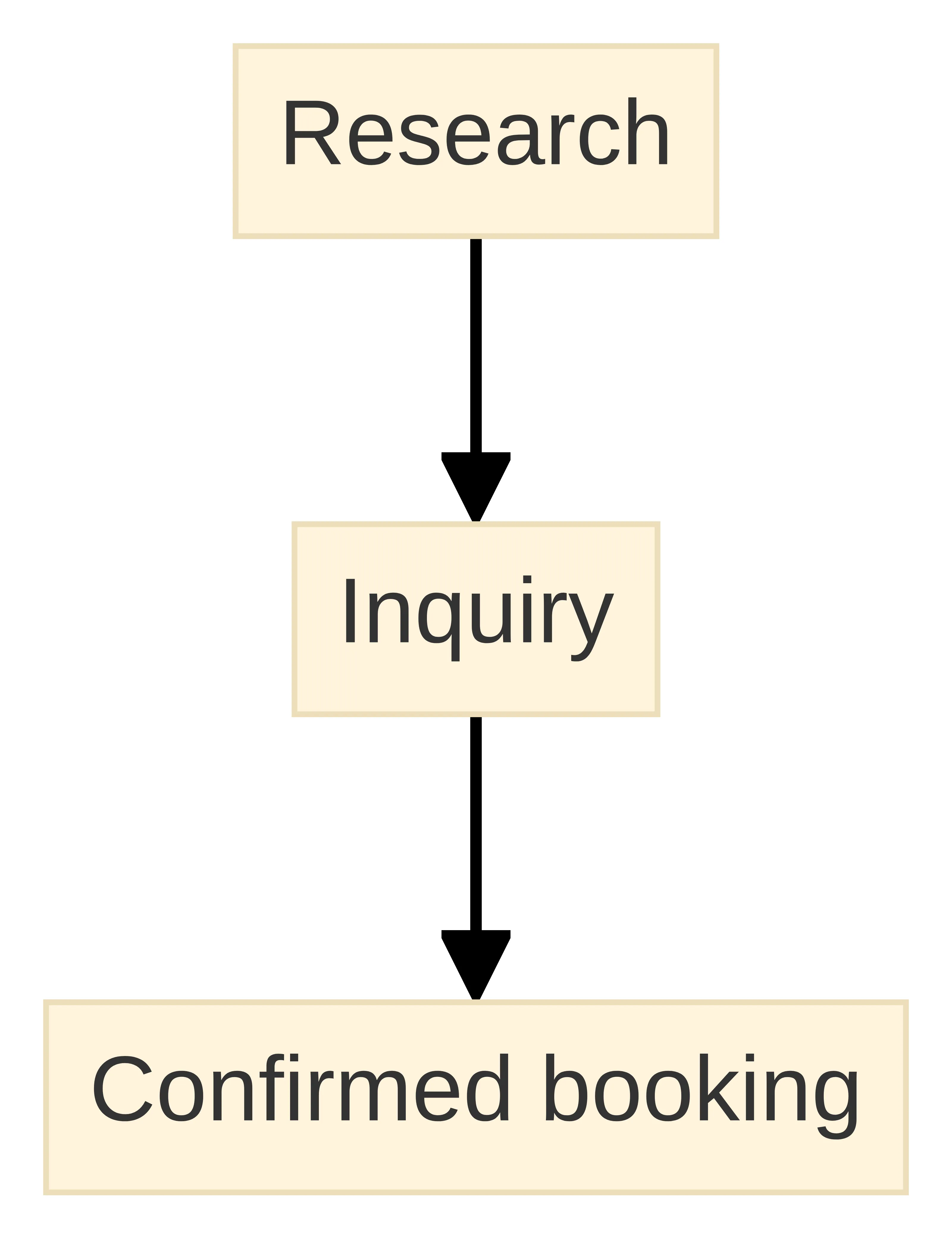
The path from research to a confirmed booking has three distinct stages, and each stage supports a different decision.
- Research: You define the event objective, guest group, date, size, experience, budget, and operating requirements. General venue and suite descriptions help you form questions, but they do not establish inventory for your game.
- Inquiry: You provide the event brief and ask for an event-specific response. A private-suite quote request is not a confirmed booking, an inventory promise, or a firm price.
- Confirmed booking: You proceed only after you have an explicit confirmation for the applicable event and suite, understand the stated amount and inclusions, and accept the terms that govern the arrangement.
Keep the distinctions visible in your internal planning. Label a spreadsheet row as “under consideration” while you are comparing options, “quoted” when you have a response to assess, and “confirmed” only when the booking status is explicit. Do not issue guest invitations that describe seating, parking, access, food, or other features as settled while those items remain subject to confirmation.
When a response arrives, compare it with the brief rather than with an earlier assumption. Check the event date, party size, ticket allocation, total amount, per-guest figure, access details, listed features, catering position, accessibility answers, and relevant terms. Record every item that remains open and assign an owner for resolving it.
Before internal approval, place each material item in one of three columns: confirmed in the response, still requiring confirmation, or outside the requested arrangement. This prevents an unanswered question from being treated as an inclusion. It also gives your finance, event, and guest-communications teams a shared status view.
A conversation can help you understand the opportunity, but it should not be treated as a booking status by itself. The same discipline applies to a preliminary amount: keep it separate from a firm figure until the applicable response and terms establish what it covers. This protects your budget approval, guest communications, and event-day planning from decisions made too early.
Proceed only when the verified value meets the brief
A final suite decision is ready when the event purpose, expected attendance, guest requirements, date, applicable inclusions, budget boundary, and operating terms have been addressed together. The practical test is simple: the option must fit the hosting objective, work for the people you expect to attend, and remain acceptable after you calculate the per-guest figure from the applicable amount.
Keep the decision open when a material answer is missing. That includes uncertain availability, an unconfirmed ticket allocation, an unresolved accessibility requirement, an unclear catering arrangement, or terms that could change the financial exposure. A smaller or different option may be more suitable than a larger one that leaves unused capacity or unresolved obligations.
Once the brief is complete, request a private-suite quote from LuxuryVIPSuites.com; the inquiry is not a confirmed booking, inventory promise, or firm price. A qualified professional should decide whether the arrangement is appropriate for your organization’s requirements and should review the applicable terms before acceptance.
What should a planner confirm before requesting an Eagles suite quote?
How can I determine the right suite size for my event?
The appropriate suite size depends on the number of guests you expect to attend. Smaller groups typically fit better in smaller suites, while larger groups require more space. It’s advisable to plan based on expected attendees to avoid overcrowding and unnecessary costs.
What factors should I consider when planning an event in an Eagles suite?
Consider the event’s purpose, guest experience, expected attendance, budget, and operational needs such as accessibility and catering. These factors will help you assess whether a suite is suitable for your corporate event.
What should I include in my inquiry for a suite quote?
Your inquiry should include details such as the event date, venue, expected attendance, purpose of the event, guest experience requirements, budget limits, and any specific operational needs. This information helps ensure the quote addresses your specific requirements.
What is the difference between an inquiry, a quote, and a confirmed booking?
An inquiry is a request for information about suite availability and pricing, while a quote provides specific details about costs and inclusions. A confirmed booking occurs only after you receive explicit confirmation of the suite and its terms.
What should I verify regarding accessibility when booking a suite?
Verify the accessibility options available for your guests, including any necessary accommodations for service animals and the availability of accessible seating. It’s important to contact the venue for specific arrangements related to accessibility.
Hosting a group?
Tell us the date and the headcount
We get back to you within one business day with what is available and what each suite costs.
Request a quote